Every journaling app tells you your entries are encrypted. It has become the least informative sentence in the category. It is printed on products where the company can read everything you write, and on products where it genuinely cannot, and the sentence looks identical in both cases.
The word only starts to mean something when you ask the next question: who has the keys?
That question has an answer for Deeditt, and it is worth stating plainly rather than leaving it behind a comfortable word.
Your Keys Are Made on Our Servers
When you create a Deeditt account, a set of keys is generated for you. Not on your phone. Not in your browser. On our servers.
This is the decision that shapes everything else, so it should be said first and without softening. Some apps generate your key on your device and never let it leave. Deeditt does not work that way. We create your keys, and we keep them.
That choice has a cost and a benefit, and both are real.
The cost is that we are not able to tell you the strongest sentence in privacy: even we cannot read this. Apps built the other way can say it, and when they say it, it is true.
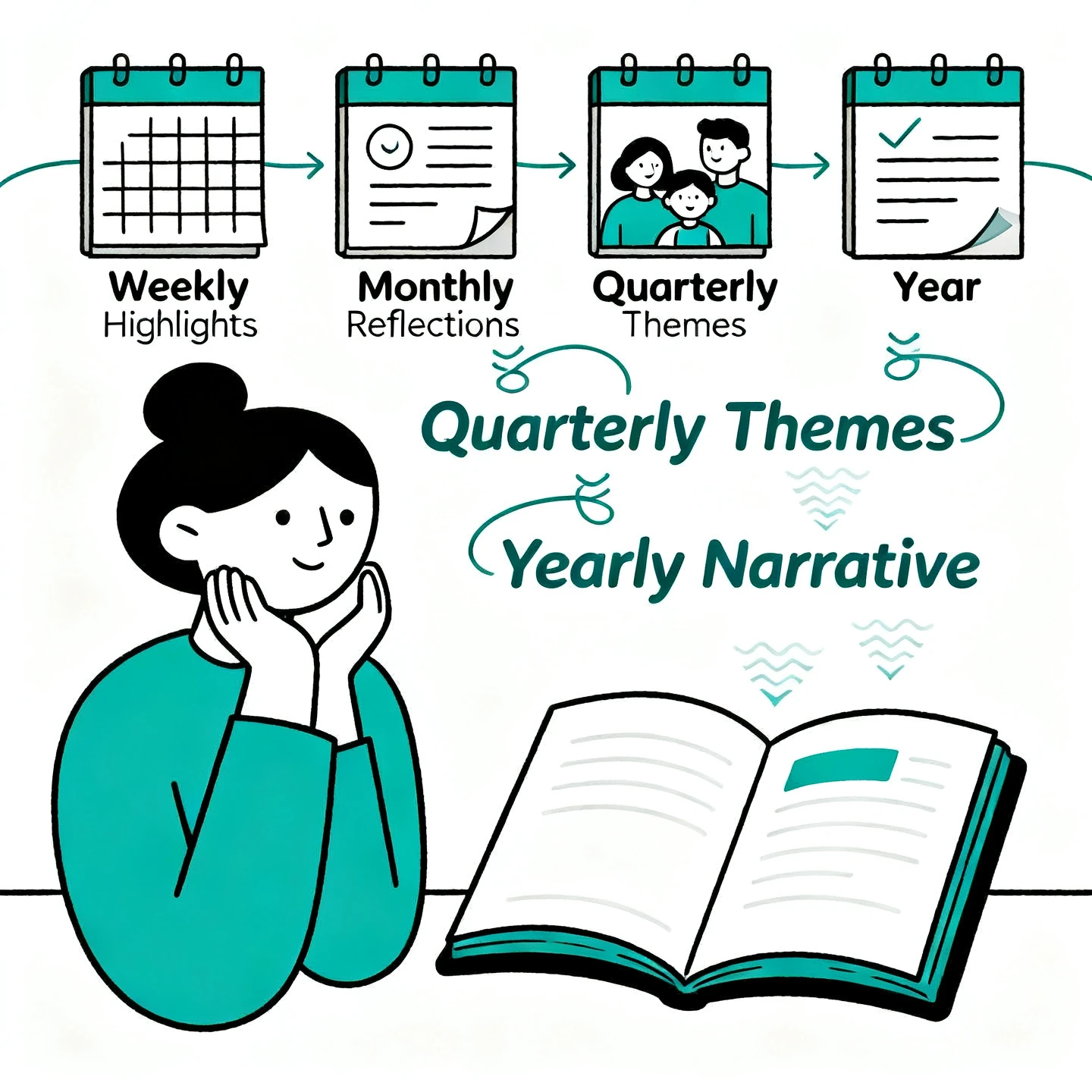
The benefit is everything that becomes possible when a service can work with your writing on your behalf — noticing that a theme has come back three weeks in a row, connecting something you wrote in March to something you wrote in August, giving you your history back on a new phone after you lost the old one in a taxi. A system designed to be blind to your content cannot do those things, and cannot rescue you when something goes wrong, because being unable to help is precisely what it was built for.
Neither design is the honest one. They are different trades. What is dishonest is taking the second trade and describing it with the first one’s sentence.
What Is Actually Standing Between Your Writing and Someone Else
Here is the part that a single word like “encrypted” flattens into nothing.
Reading one of your entries requires three separate things.
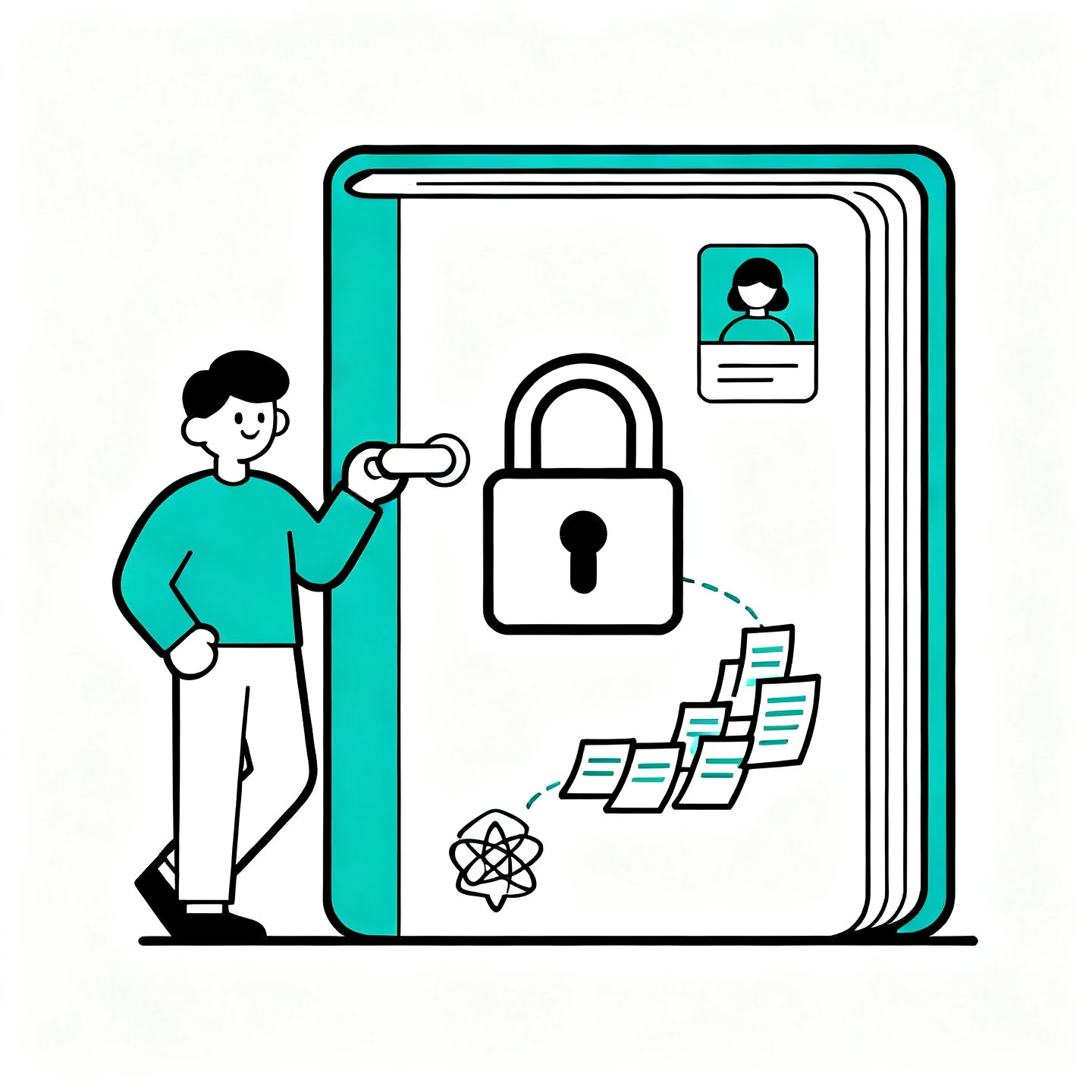
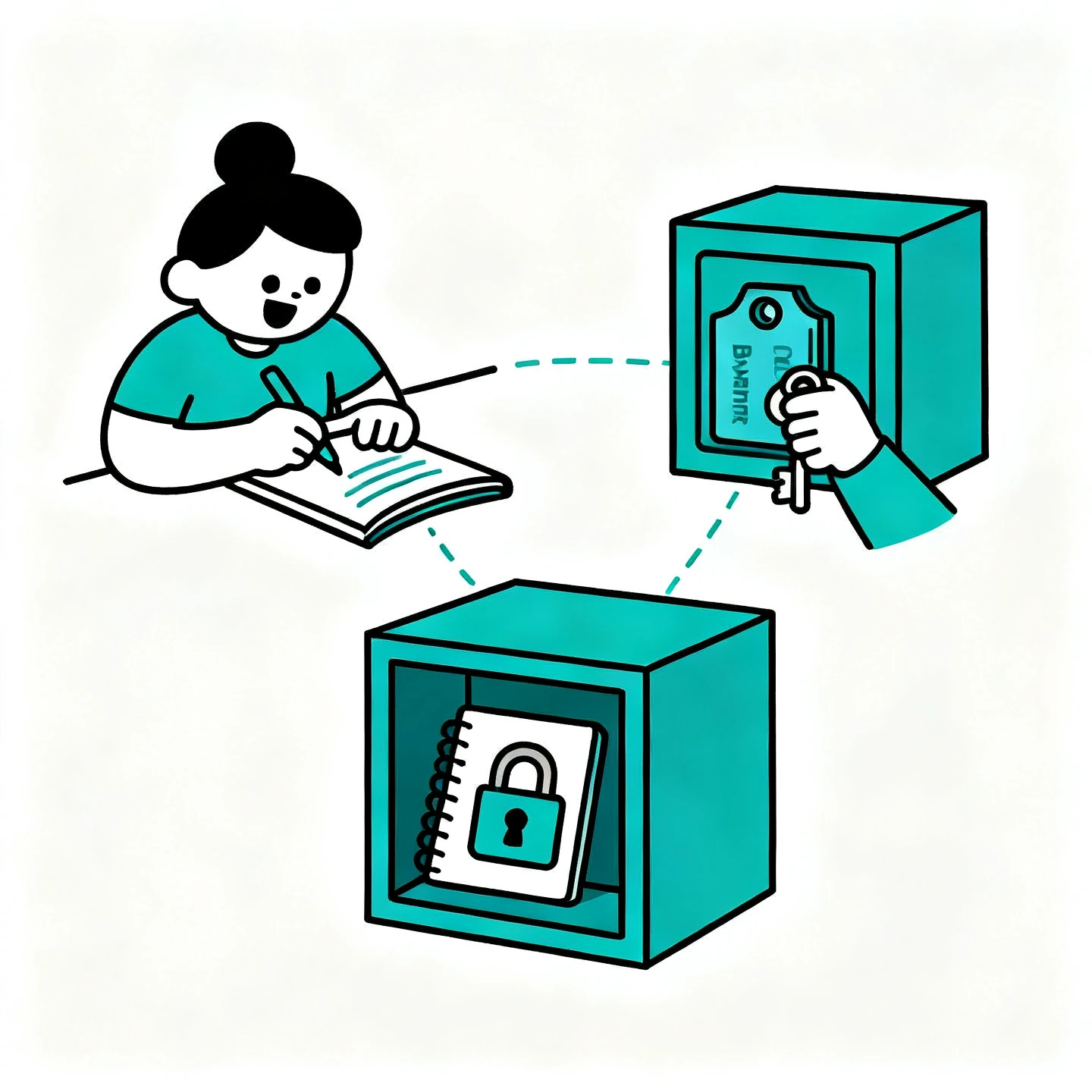
The first is the entry itself, which sits in our database as a locked box. Not as text that happens to be behind a password — as content that has been scrambled into something with no meaning. Someone who walks off with the entire database walks off with a warehouse of locked boxes and nothing that opens them.
The second is your personal key, the thing that opens your boxes. It does not live in that database. It lives somewhere else entirely, in different storage, on different infrastructure. And it is itself locked.
The third is what unlocks that key: a master credential that lives in neither of those places. It sits in a secured store of its own, kept apart from the data and apart from the keys.
The plainest way to picture it: your writing is in a safe, the key to that safe is in a different building, and the combination to open that building is held somewhere else again. Getting one of the three gets you nothing. The database alone is unreadable. The keys alone unlock nothing. The master credential alone opens no door.
This is not a promise that the three can never be brought together. It is a description of what would have to happen first — which is a far more useful thing to know than a slogan.
Why We Say It This Way
There is a version of this article that would have been easier to write. It would have used the phrase “end-to-end encrypted,” which sounds stronger, and readers would have nodded and moved on.
We would rather describe the actual shape of the thing. A guarantee that does not survive contact with a technical reader is worse than no guarantee at all, because when it collapses it takes the credible parts down with it. Everything above is checkable, and it is what we would tell a security researcher who asked.
So, concretely: your entries are private from other users, always. They are stored in a form that is meaningless without keys held apart from them. We are not cryptographically blind to your writing, and we do not claim to be.
If you need a service that is structurally incapable of reading what you write — because of what you write, or who might one day ask for it — that is a real requirement, and there are apps built specifically for it. We wrote about that trade-off in more depth in How Private Is Deeditt?, and the honest recommendation there still stands.
For most people writing about their week, their work, their relationships, and what they are trying to change about how they live, this model is the right one. It keeps your writing away from other people, and it lets the product be useful to you rather than merely being a vault.
Next in this series: what happens when you turn on Insights, and exactly what leaves the building when you do.