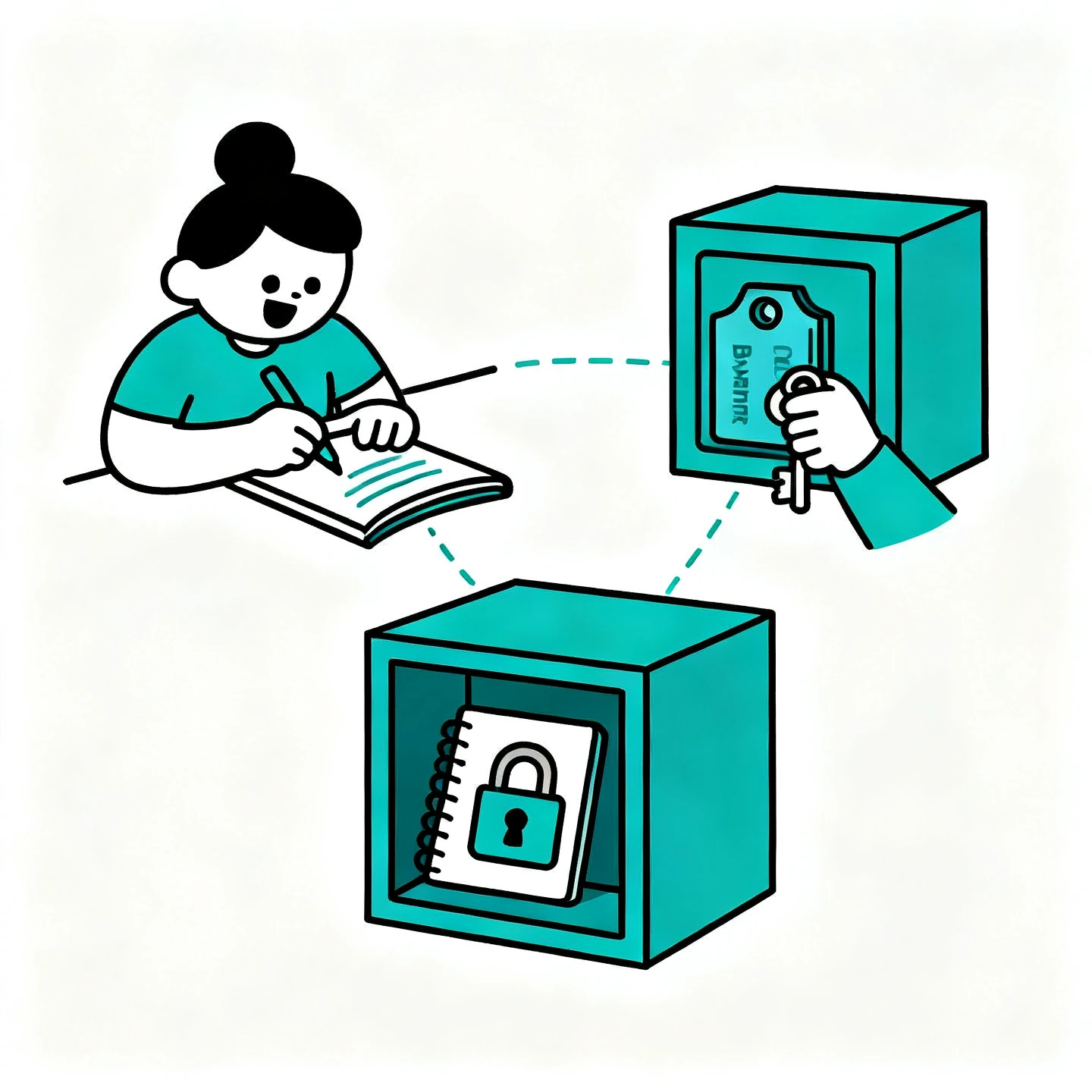
When people ask if a journaling app is safe, they’re really asking two different questions. First: will random strangers be able to read my private thoughts? Second: can the company running the app read my entries?
For most journaling apps, including Deeditt, the answer to the first question is straightforward. Your private entries are encrypted, protected behind authentication, and kept separate from public content. Other users can’t see them. That part works as you’d expect.
The second question is where it gets more interesting.
The Two Privacy Models
There are essentially two approaches to private journaling apps, and they make different tradeoffs.
The first is called end-to-end encryption, or E2EE. With this model, your entries are encrypted on your device with a key only you control. The company running the app literally cannot decrypt your journal entries, even if they wanted to. They’re storing encrypted data they can’t read. This is maximum privacy. It’s also limiting.
The second approach, which Deeditt uses, is server-managed encryption. Your entries are still encrypted and kept private, but the service manages the encryption keys. This means the company could technically access your content if they needed to. It also means they can do things with your encrypted data that E2EE systems struggle with.
Neither approach is “wrong.” They’re optimized for different priorities.
What E2EE Gets You (and Costs You)
End-to-end encryption gives you one powerful guarantee: even the provider can’t read your journal. If that’s your top priority — if you’re writing things where provider access is unacceptable — then E2EE is the right choice.
But that guarantee comes with constraints. Because everything has to happen on your device with keys only you control, certain features become difficult or impossible. Sophisticated analysis of your entries. Pattern recognition across months of writing. Anything that requires the service to “understand” your content can’t work, because the service is cryptographically blind to what you’ve written.
There’s another cost that’s less obvious: you become solely responsible for not losing access. If your encryption key lives only on your device or wherever you stored it, and you lose that key, your journal can become unrecoverable. The provider can’t help you because they were designed not to be able to help you. That’s the whole point of E2EE.
For some people, this feels empowering. You control everything. For others, it creates real anxiety. Years of journal entries that could vanish if you lose a device, forget a passphrase, or misplace a recovery key. The system that protects you from the provider also removes the provider’s ability to rescue your content when something goes wrong.
For many people, that’s a fine tradeoff. For others, it’s a source of stress rather than reassurance.
What Deeditt’s Model Enables
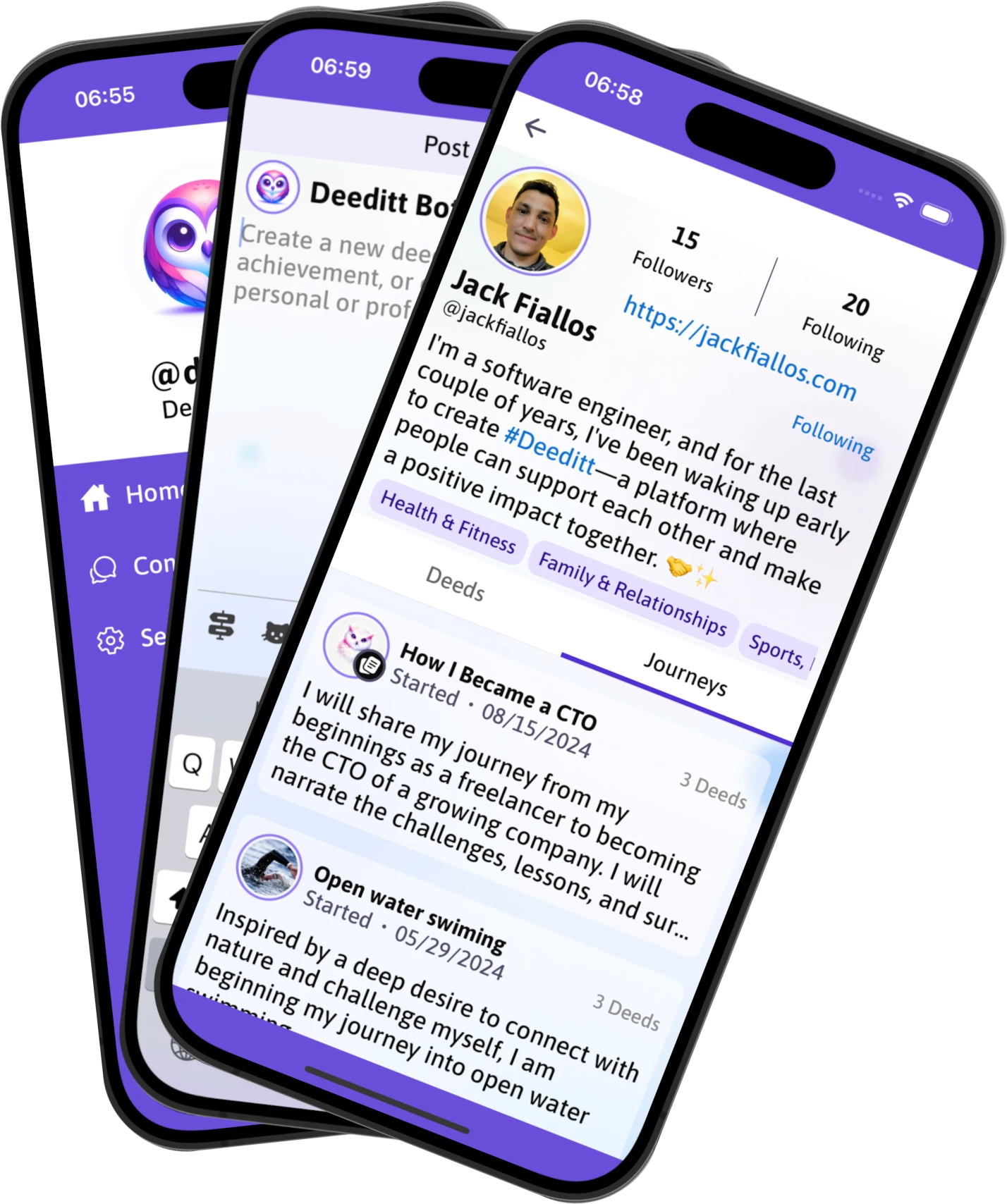
Deeditt chose server-managed encryption because the goal isn’t just to store memories. It’s to help you understand them.
This approach means your entries stay private and protected, but the platform can also offer features that require actually processing your content. Things like Memory Insights that surface patterns across your entries. Connections between experiences you wrote about months apart. Reflection tools that help you see themes in your own thinking over time.
These features require the service to work with your content in ways that E2EE systems can’t do without keeping everything on your device, which creates its own problems with performance, sync, and capability.
The Honest Tradeoff
Here’s the straightforward version: Deeditt is private from other users and secure in normal use. Your entries are encrypted. Other users can’t access them. The system treats private content as private.
But Deeditt is not designed to be cryptographically unreadable by the provider. If you need absolute zero-knowledge privacy where even the service operator cannot access your entries under any circumstance, an E2EE app is the better fit.
If you want private journaling plus intelligent features that help you learn from your own writing over time, Deeditt’s model makes that possible.
Who Should Use Which
For everyday journaling — daily reflections, mood tracking, life updates, working through decisions, processing emotions — Deeditt’s privacy model is appropriate. Your entries are protected. Other users can’t see them. The system respects their private status.
For highly sensitive content where you need cryptographic certainty that even the provider cannot access your entries, an E2EE-first app is the better choice.
It’s not that one is “more safe” in absolute terms. They’re safe in different ways, optimized for different needs.
What This Means in Practice
Most people journaling about everyday life — relationships, work stress, personal growth, daily reflections — don’t need cryptographic provider-blindness. They need privacy from other users, which Deeditt provides, plus tools that actually help them understand their own patterns and growth over time.
But some people have valid reasons to need zero-knowledge encryption. If that’s you, be honest about it and choose accordingly.
The question isn’t “Is Deeditt safe?” The question is “Safe for what?” For private reflection with intelligent features that help you learn from your own writing, yes. For content where even the platform operator must be cryptographically unable to help, no.
Both models exist for good reasons. Pick the one that matches what you actually need.