A post captures a moment. A journey captures change.
Most social products are designed around isolated updates. One post, one reaction, and then attention moves on. This makes publishing easy, but it limits how much meaning can be preserved.
A single post can show what happened, but it rarely shows how things evolved.
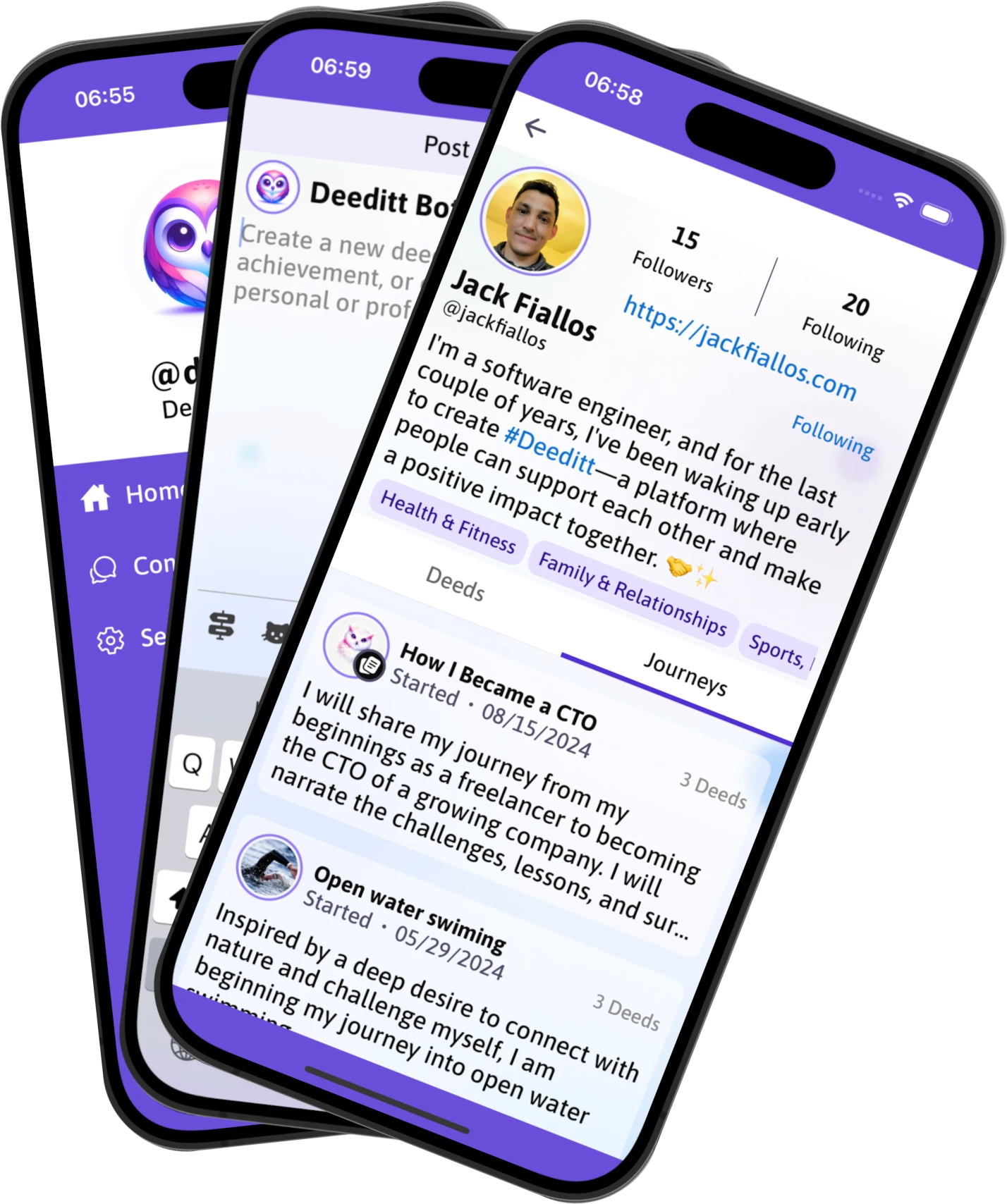
Deeditt approaches this differently. A journey is not just a collection of posts. It is a container that connects related moments over time. Each deed adds context, sequence, and emotional continuity to the story.
Why this matters for real writing
Real life does not happen in isolated moments. Growth, learning, recovery, and personal change unfold gradually. They involve multiple steps, decisions, and reflections.
Journeys help people:
- revisit important turning points without losing context
- understand progress as a process, not a performance
- share experiences in a way that others can follow and learn from
Instead of summarizing, writers can show how something actually unfolded.
Slower structure creates better signal
By grouping entries into journeys, Deeditt removes the pressure to constantly produce standalone content. Writing becomes more natural. People add a new entry when something meaningful happens.
Over time, these entries build a narrative without forcing speed or frequency.
For readers, this creates a better experience. Instead of scrolling through disconnected fragments, they can follow a story from beginning to evolution.
Product design consequence
Journeys are not just a feature. They shape how the product works:
- content is explored with continuity in mind
- reflection becomes part of the writing process
- publishing feels intentional, not reactive
The outcome we want
The goal is not to create more content, but to create a meaningful archive of life. Journeys make it possible to capture change, preserve context, and tell stories that remain useful over time.