Most journaling apps assume one person, one voice, one account. That works for private reflection. It works badly for a relationship, where the thing you would most want to remember happened to two people at once — and each of you remembers it differently.
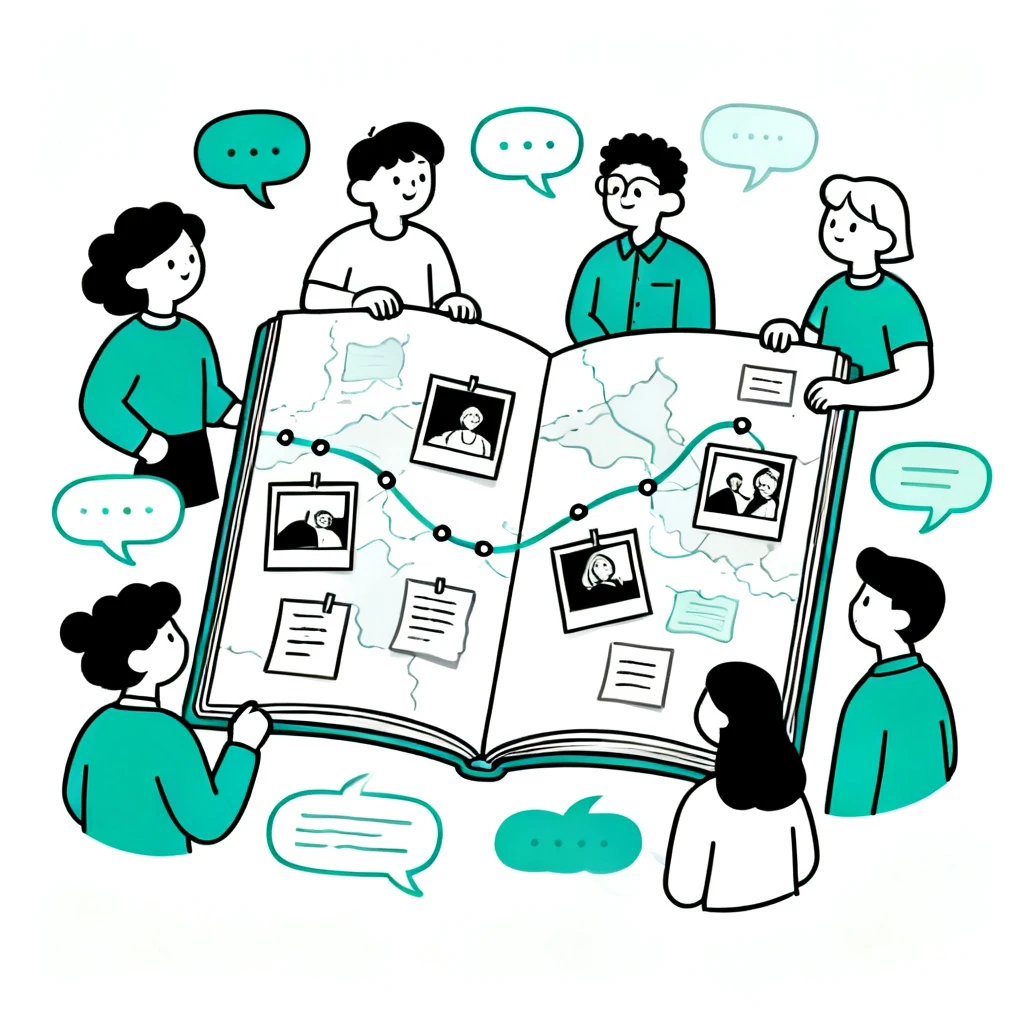
A shared journal for couples is not a shared notes file. It is a record where both of you write your own version of the same stretch of life, and both versions survive.
Why couples end up wanting this
The reasons people go looking are consistent, and none of them are romantic in the greeting-card sense:
- A long-distance stretch. You are living parallel lives and want a way to stay in each other’s days that is slower and more considered than a message thread.
- Something hard. A diagnosis, a job loss, a move, fertility treatment, a bereavement. You are both going through it and neither of you has the energy to narrate it out loud every evening.
- Something big and good. A first year of marriage, a renovation, a move abroad, a first child. The details are vivid now and will be gone in eighteen months.
- Therapy or counselling. Writing between sessions, separately, then reading each other’s.
What these have in common is that a single-author diary loses half the record, and a shared photo album loses all of the interior part.
What to look for in a shared journal
Both people write, not one person plus a reader. A lot of “sharing” in journaling apps means read access. That is a different product. You want an entry from each of you sitting in the same timeline.
Separate voices, one record. The point is not to agree on a version. It is to keep two accounts of the same day side by side, in each person’s own words.
No participant fee for the second person. Check whether both of you need to pay. Often only the person who creates the journal does.
It survives the app. Ask about export before you put two years into anything.
Honest privacy claims. Read what the app actually says about encryption, not what the landing page implies. We will do our own below.
How this works in Deeditt
In Deeditt the unit is a Journey: a collection of moments — Deeds — that documents something over time. A shared Journey is one that more than one person contributes to.
You create the Journey and invite your partner. They get an email and a notification, and from that point they add their own Deeds to it. Their entries are theirs, in their own words, alongside yours. There is no cap on collaborators, which matters less for a couple than for a family, but it does mean the journey can widen later — a sibling, a close friend, a co-parent — without you hitting a ceiling.
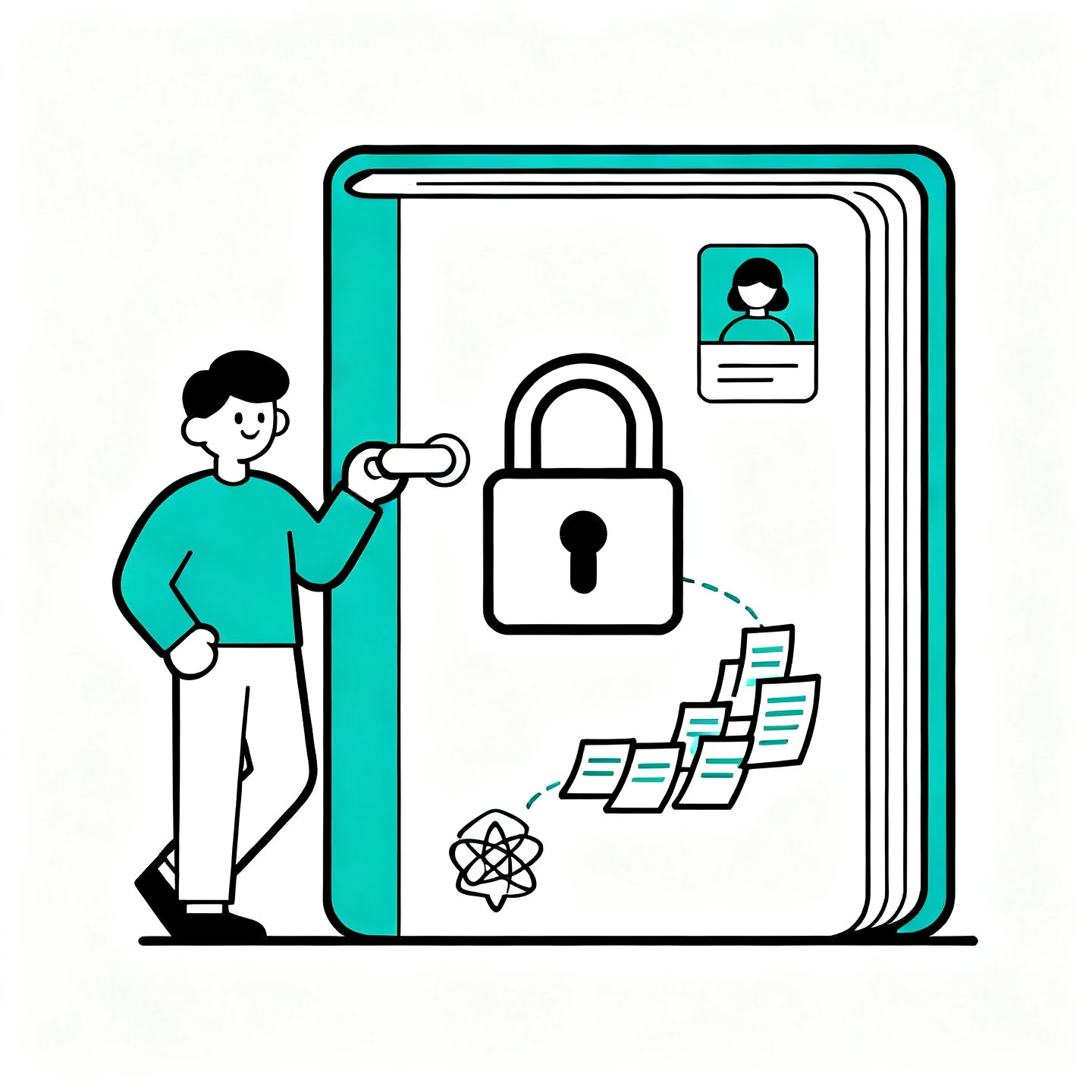
Each Deed and each Journey carries its own visibility: private, community — other Deeditt members but not the open internet — or public. A relationship journal will usually stay private. Nothing about it is published anywhere unless you choose to publish it.
Alongside all of this you each keep Memories, the private journaling space, which is nobody’s business but yours and is free on every plan. Plenty of couples use both: the shared Journey for the record you are building together, Memories for the parts you are still working out alone.
What it costs
Creating a shared Journey needs Pro — $4.99/month or $49.99/year. The person you invite participates without paying. So for two people it is one subscription, not two.
Two things we will tell you plainly
Deeditt is not end-to-end encrypted. Entries are encrypted at rest and in transit and are private from other members, and the encrypted entry, the key that opens it and the passphrase that unlocks that key are each stored in a different system. But the keys are generated on our servers, so we are not going to claim we are cryptographically unable to read anything. If a shared journal that the provider genuinely cannot open is your requirement, Day One’s Shared Journals are end-to-end encrypted and capped at 30 people. That is a real advantage and we would rather you knew.
Everyone invited to a shared Journey has the same access. There are no reader-only roles or per-person permissions today. If you invite someone, they can contribute to that journey the same way you can. For a couple that is usually exactly what you want. It is worth knowing before you invite a wider circle.
How to actually keep one going
The failure mode for couples journals is not privacy. It is that they stop after three weeks.
Pick a rhythm neither of you will resent. Weekly beats daily for two people. Sunday evening, one entry each, fifteen minutes.
Write your own version, not the joint version. The value is in the difference. If you find yourselves negotiating one account of the day, you have accidentally made a shared notes file.
Do not edit each other. Two true accounts that do not match are more useful in three years than one smoothed-over one.
Let it be uneven. One of you will write more. That is fine and it is still a shared record.
Read backwards sometimes. Once a season, read the same month from a year earlier. This is the part people say changes things — not the writing, the rereading.
What you end up with
Two years in, a shared journal for couples is the only artefact you will have of what a period of your life was actually like from the inside, twice over. Photographs record that you were there. A shared journey records what each of you thought was happening.
Those are not the same thing, and only one of them can be reconstructed later.