AI can write quickly, summarize effectively, and even imitate voices convincingly. It can generate blog posts, answer questions, and carry on conversations that feel surprisingly human. But there’s something it fundamentally cannot do: it cannot live your Tuesday. It cannot feel the weight in a room when someone says something that changes everything. It cannot know what a small moment meant to you before you understood it yourself.
That difference matters more than it might seem at first.
The Problem With AI Memory Chat
A lot of apps are racing to add AI chatbots trained on your personal data. The pitch sounds appealing: talk to an AI that knows your history, ask it questions about your own life, get insights through conversation.
But there’s a catch. Chat interfaces naturally encourage continuation. More prompts, more responses, more interaction. The system is designed to keep the conversation going. And while that works well for many tasks, reflection doesn’t always benefit from that dynamic.
Sometimes the most meaningful insight isn’t an ongoing dialogue with AI. Sometimes it’s simply: “Here’s a pattern you forgot existed.” Then silence. No companion relationship. No engagement loops. No infinite conversation. Just enough context to help you reconnect with yourself.
Interaction Isn’t Always Understanding
Many AI-powered products are built around momentum. The more you ask, the more it responds. The more it responds, the more you stay in the loop. This creates engagement, which is valuable for productivity tools, entertainment, and search.
But memory is different. A memory system should help you see your life more clearly, not just keep you talking. There’s a real difference between a tool designed to encourage more interaction and a tool designed to help you notice something you’d forgotten.
One is built for continuation. The other is built for understanding. Those aren’t the same goal.
Why Silence Can Be More Valuable
Not every insight needs a back-and-forth. Sometimes the right move is to show you a pattern, a timeline, a recurring theme — and then stop. That pause is part of the value. It gives you space to think, to feel, to connect the dots yourself.
Too much interaction can actually crowd out reflection. If every insight turns into another question, another prompt, another response, the experience starts to feel endless. You stay active, but not necessarily clearer.
A quieter system can be more respectful. It can say enough, then step back and let you do the rest.
What Memory Systems Should Actually Do
The best memory systems probably shouldn’t try to be your friend, coach, or therapist. They shouldn’t pretend to understand everything, and they shouldn’t force a constant relationship.
Their strength comes from restraint. From knowing what they’re good at: organizing your entries, spotting patterns you can’t see from inside your own timeline, connecting past moments to present ones, reminding you of what you once cared about.
These aren’t small functions. They’re often more useful than endless chat. They don’t require the system to simulate understanding. They just require good structure and smart pattern recognition.
Two Different Product Philosophies
This is where product philosophy matters. Some systems are built to maximize interaction — keeping you engaged, responding constantly, maintaining a relationship. Others are built to maximize insight — surfacing what matters, then getting out of the way.
Those goals can overlap, but they’re not identical. And they lead to very different decisions about what features to build and how they should work.
If a product values understanding over engagement, it can be quieter. More sparse. More selective about when it speaks. That might feel less impressive at first glance. It might even look less “intelligent.”
But in practice, it can be more human. Because the goal isn’t to keep a conversation going forever. The goal is to help someone reconnect with their own life.
The Resources Question
There’s also a practical consideration. AI chatbots consume significant computational resources. Training models on personal data, maintaining conversational context, generating responses — all of this requires processing power that adds cost and complexity.
For what? If the real value is pattern recognition and connection, you don’t need a chatbot. You need good data organization and smart analysis. The chatbot might be impressive, but it’s solving a different problem than the one most people actually have with their memories.
A Different Approach to AI
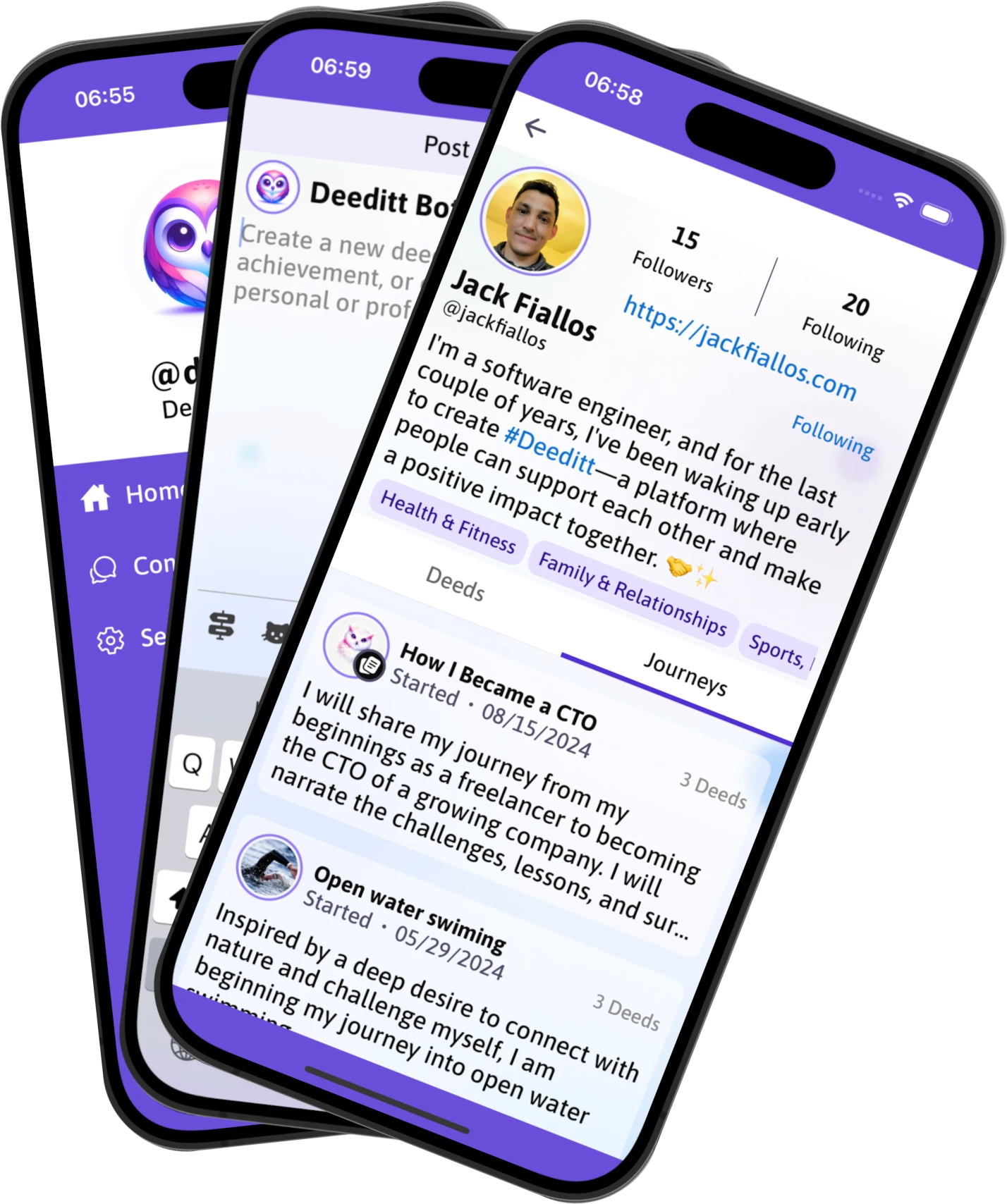
This is exactly why Deeditt chose not to build an AI chatbot. The AI doesn’t sit there waiting for you to talk to it. It works as an extension of your memory, surfacing patterns and connections you might have missed, then stepping back.
The goal isn’t to keep you engaged with the app. It’s the opposite. Deeditt wants you to learn from your patterns, gain the insight, and then get back to living your life. The app isn’t trying to be your companion or keep you connected. It’s trying to help you understand yourself better so you can close the app and actually use what you learned.
This is a fundamentally different relationship with AI. Not interactive. Not conversational. Just analytical in the background, working as a tool that extends what your own memory can hold and notice.
When Technology Should Step Back
Ironically, some of the most human experiences might require technology that understands its own limitations. A system that knows when you need a nudge and when you need silence. That can show you something important, then trust you to know what to do with it.
That’s not about making the AI less capable. It’s about designing for the right kind of help. Not all help needs to be conversational. Not all insight needs elaboration.
Sometimes the most valuable thing technology can do is show you something you’d forgotten, then get out of the way and let you remember what it means. Not keep you in the app. Not create another thing to check. Just give you the insight and let you go live with it.
AI can generate endless content. But it can’t generate your lived experience. And the best memory tools are the ones that understand that difference — and design accordingly.