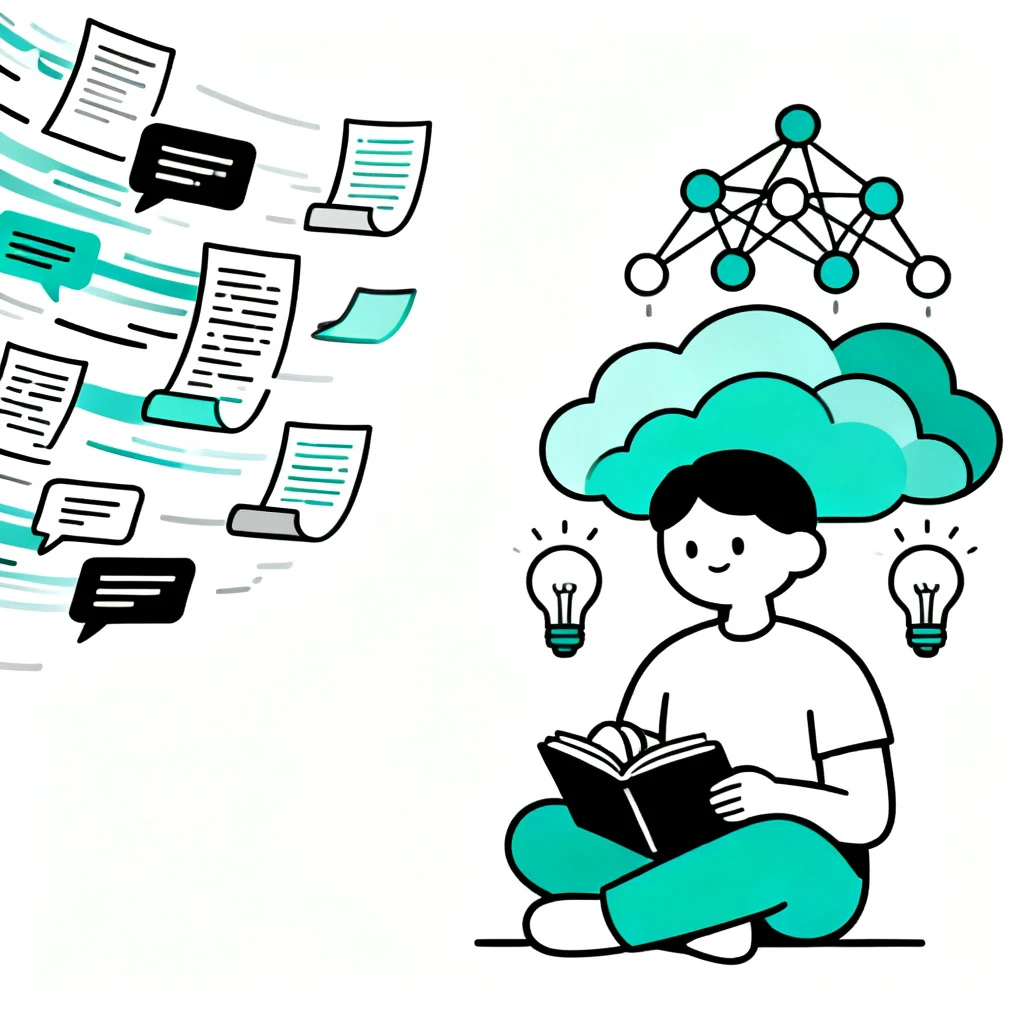
Right now, somebody you know is Googling something you figured out last year. They’re scrolling past listicles and AI summaries, typing “reddit” into the search bar to find one real human who’s been where they are. That person could be you. You just don’t know it, because you haven’t told anyone.
There’s a name for why your lived knowledge feels boring to you: the curse of knowledge, identified in 1989 by economists Camerer, Loewenstein and Weber. Once you know something, you literally can’t reconstruct what it was like to not know it. That promotion playbook, the trick that finally got your toddler to sleep, the boring email you sent to dispute a medical bill — to you, obvious. To someone three months behind you, gold.
The “everyone already knows this” lie
It’s not just modesty. A 2025 BMC Psychology meta-analysis (n=11,483) put global imposter-syndrome prevalence at 62%. Most people walking around think they’re faking it. So we don’t volunteer what we know — we assume the room is full of experts who’d find our story trivial.
It isn’t. In a famous Stanford classroom exercise documented by Chip Heath in Made to Stick (2007), only 5% of audience members could recall any statistic from a one-minute presentation, but 63% remembered the story. A 2024 Quarterly Journal of Economics paper showed why: statistics’ effect on beliefs decays 73% within a day; stories decay only 32%. Your specific, slightly embarrassing anecdote sticks. The Wirecutter listicle does not.
People want to help. They want to be helped, too.
Flynn and Bohns’ 2008 study is one of the most replicated findings in social psychology: askers underestimate compliance with direct requests by about 48%. People predicted they’d have to ask 7.2 strangers to get an escort across campus. They actually had to ask 2.3. Zhao and Epley showed in 2022 that helpers also feel better after helping than askers expect.
So both sides are wrong: the person who needs your story thinks they’d be imposing, and you think your story is too ordinary to offer. Both stay silent.
Why messy beats polished
Eskreis-Winkler and Fishbach’s 2019 research shows people learn poorly from their own failures (ego), but learn just as much from others’ failures as from others’ successes. The implication is huge: the messy middle of your story — the part you’d edit out of the LinkedIn post — is the most useful part. Your false start matters more than your eventual win.
There’s even a selfish reason to share. Eskreis-Winkler, Fishbach and Duckworth’s 2018 Psychological Science paper found middle-schoolers who gave study advice studied more themselves; their 2019 PNAS field experiment with nearly 2,000 high-schoolers found advice-givers got better grades. “It is in giving that we receive.”
Stop waiting to be asked
Bohns and Flynn’s 2010 paper “Why Didn’t You Just Ask?” found helpers chronically underestimate how embarrassing it is for someone to ask. The advice “just ask if you need help” is, statistically, useless. Which means the burden has to flip the other way: offer first.
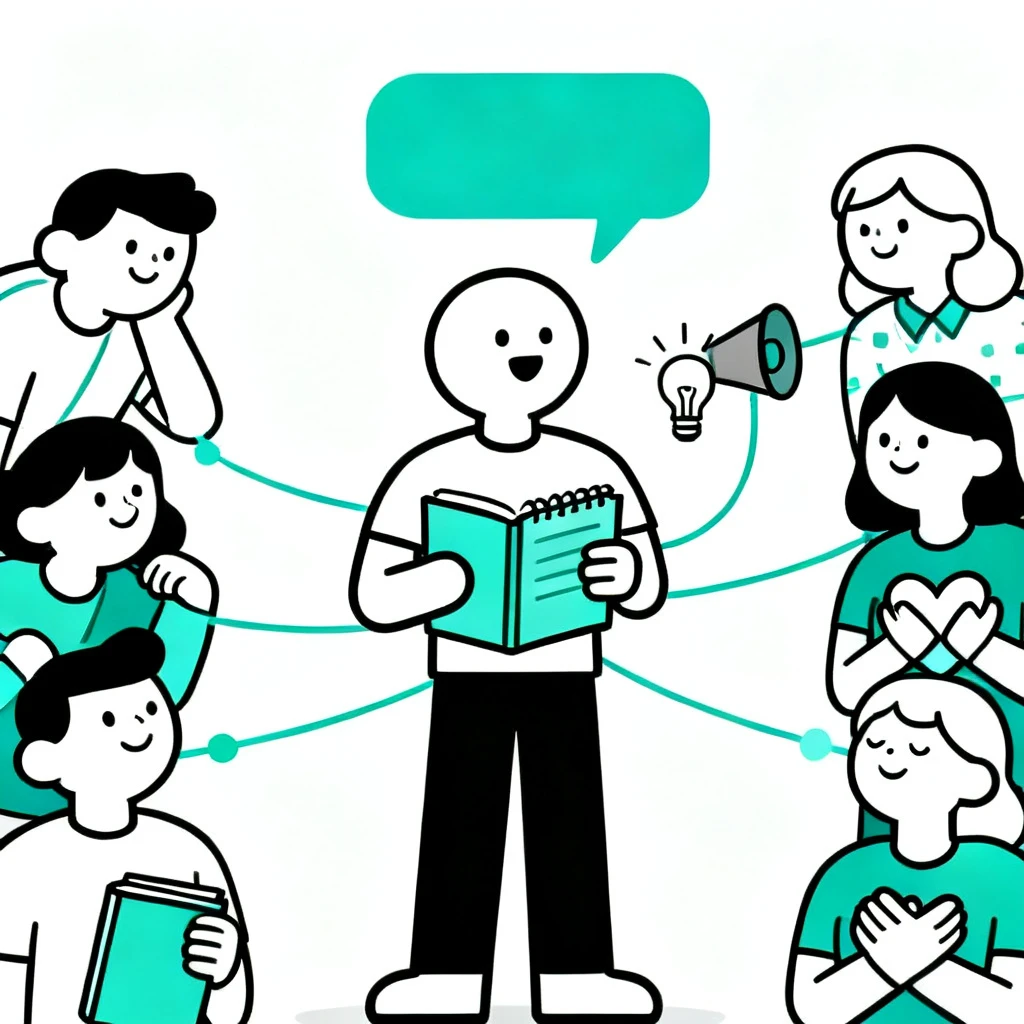
You don’t need to be an expert. You just need to have been there. Tell the friend job-hunting what your last six rejections taught you. Tell the new parent the small thing that finally worked at 3 a.m. Document your own messy journey somewhere a future stranger can find it. Your imperfect, specific, slightly-too-personal story is the thing the algorithm can’t fake — and the thing somebody, somewhere, is searching for tonight.
Your false starts are more useful to others than your wins. When you sanitize your story, you delete the most valuable part. Do not forget to Document the messy middle while you’re still in it. The curse of knowledge erases novice perspective fast — capture it now (journal, voice memo, draft post) before “obvious” sets in.