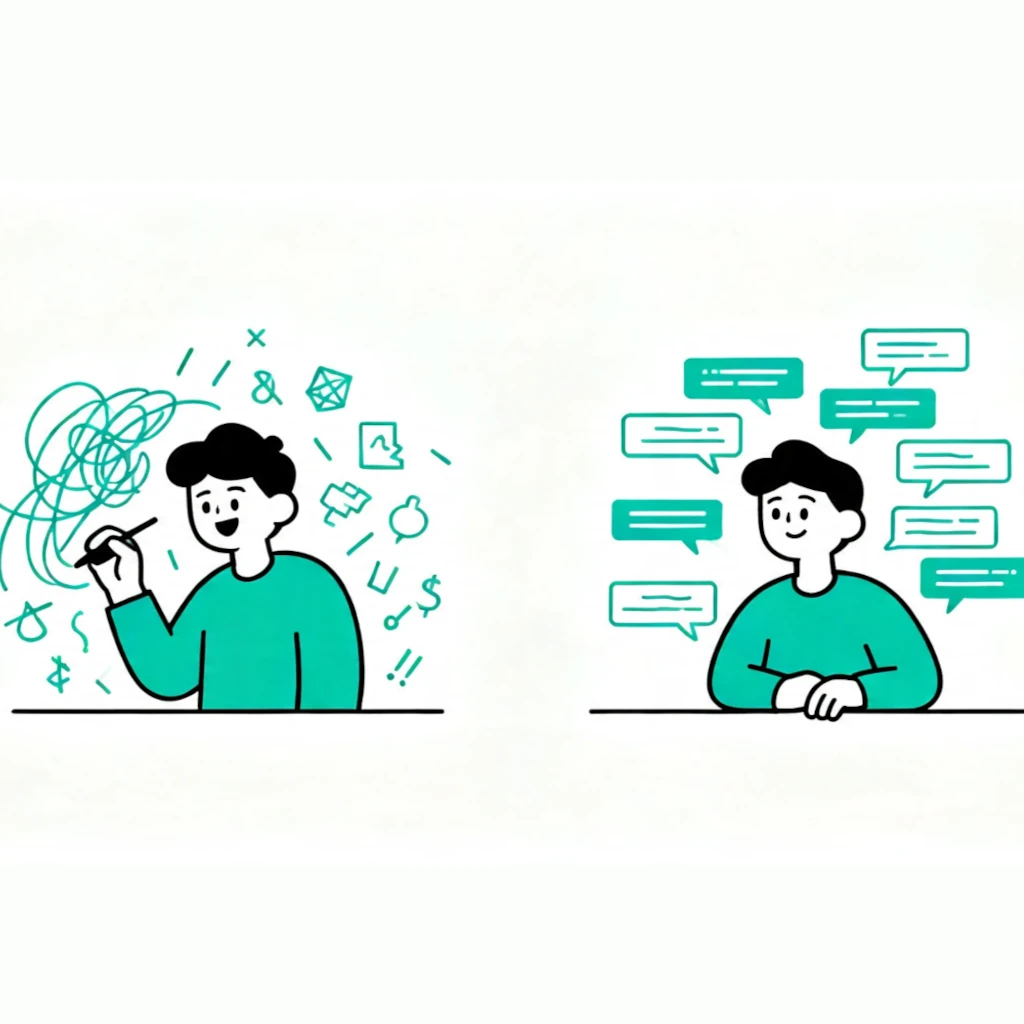
We’re entering a strange moment. AI can write a blog post in thirty seconds. It can draft your email, summarize a meeting, or generate a product description before you finish your coffee. Writing, as a mechanical act, is becoming almost trivially easy.
That should be good news. And in many ways, it is. But it’s also revealing something uncomfortable: most of what we called “writing” was actually just transcription. The hard part was never the typing. It was the thinking that came before the typing. And AI can’t do that part for you.
When Everyone Can Generate, Nothing Stands Out
Here’s the problem with infinite content generation: when everyone has access to the same tools, speed stops being an advantage. If you and your competitor can both produce a polished article in minutes, what separates you?
Not how fast you write. Not how many words you produce. What separates you is whether you had something worth saying in the first place.
AI will make mediocre ideas look professional. It will polish weak arguments until they read smoothly. It will take vague thoughts and arrange them into coherent paragraphs. This is powerful, but it’s also dangerous. Because it creates the illusion that you’ve done the work when you’ve only formatted it.
The Real Scarcity
In a world where generating content is free, the scarce resource becomes clear thinking. The ability to identify what actually matters. To cut through noise and say something true. To start from a question that’s worth answering instead of just filling space with words.
This isn’t about writing ability anymore. It’s about intellectual honesty. About being willing to sit with a problem long enough to understand it. About doing the hard work of figuring out what you actually believe before you ask AI to express it for you.
Most people won’t do this. They’ll take the shortcut. They’ll let AI generate content based on surface-level prompts. And the internet will drown in articulate nothing.
What AI Can’t Fake
There’s something readers can sense, even if they can’t quite name it. They can tell when writing comes from actual thought versus when it comes from assembling information into plausible-sounding sentences.
The difference is depth. Lived experience. The willingness to say something specific instead of something generic. The kind of thinking that comes from wrestling with an idea over time, not from asking a chatbot for “5 tips about X.”
AI can mimic this if you feed it well. But it can’t generate it from nothing. It can only work with what you give it. Garbage in, articulate garbage out.
The Trap of Efficiency
Here’s where it gets tricky. AI is so good at producing content that it becomes tempting to skip the thinking phase entirely. Just start generating. See what comes out. Refine from there.
Sometimes that works. But more often, it leads to content that sounds fine and says nothing. Because the thinking wasn’t done upfront. The idea wasn’t developed. You optimized for output instead of insight.
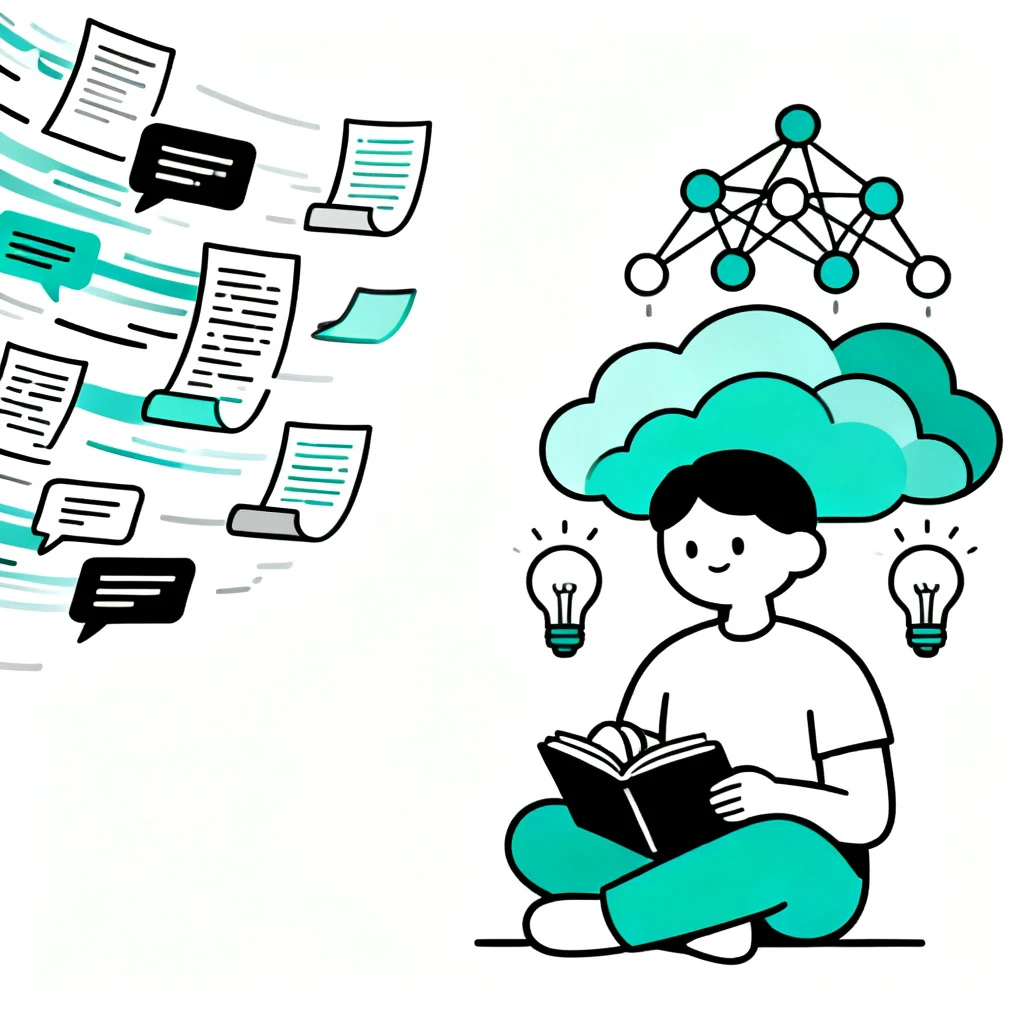
The best use of AI isn’t to avoid thinking. It’s to extend thinking. To take an idea you’ve already developed and help you express it more clearly. To handle the formatting and structure so you can focus on the substance.
But substance has to exist first. AI can’t invent it for you.
What This Means for You
If you’re creating anything — writing, designing, building — the question is no longer “can I produce this fast enough?” AI solved that problem. The question is “did I think this through?”
Did you identify the actual problem? Did you notice something others missed? Did you form a perspective that’s grounded in your own experience and judgment? Or did you just ask AI to generate content about a topic you haven’t really thought through?
The people who win in the AI era won’t be the ones who generate the most content. They’ll be the ones who have something worth generating content about.
The New Discipline
This requires a different kind of discipline. Not the discipline of sitting down to write every day. The discipline of sitting down to think every day. To question your assumptions. To dig into why you believe what you believe. To develop ideas that are actually yours, not just summaries of what everyone else is saying.
AI will make writing faster. That’s decided. The question is whether we’ll use that speed to produce more noise or to finally focus on what actually matters.
The machine handles the typing. We need to handle the thinking. That’s the deal.