Here’s the uncomfortable truth about journaling: the act of writing isn’t where the magic happens. Writing is collection. The magic is in the read-back.
Think of it this way. A single daily note is a measurement — useful, but mostly noise. One entry can’t tell you that you’re flat every Wednesday, that the project you tell people you love actually drains you, or that your best decisions all happened on the same kind of morning. Those signals only show up when you stack the measurements and squint.
This is why the people who get the most out of journaling tend to write less per day, not more. A few honest lines — what you did, how you felt, what you decided, what surprised you — beat a 1,000-word emotional dump. You’re not writing for catharsis. You’re building a dataset about one specific person: you.
Then comes the part almost nobody does: the review.
Tim Ferriss, who keeps a daily Five-Minute Journal, recommends going back every quarter to look for patterns — and the two answers he keeps writing to “what could make tomorrow better?” are, embarrassingly, “drink less coffee” and “wake up earlier.” Boring, repeated, life-changing. David Allen built an entire productivity system around the Weekly Review for the same reason: a list you never re-read is just a graveyard of intentions.
A useful cadence: skim weekly (what energized me, what drained me, what surprised me?), zoom out monthly (what’s repeating? what changed?), and do an honest annual pass — Tim Ferriss’ “Past Year Review,” where you sort calendar entries into energy-positive and energy-negative columns, then schedule more of the first and ban the second.
When you review, you stop asking “what should I do?” and start asking “what does my own life keep telling me?” That shift — from prescription to evidence — is what turns notes into direction. You stop arguing with yourself about whether mornings work for you. The notes already know.
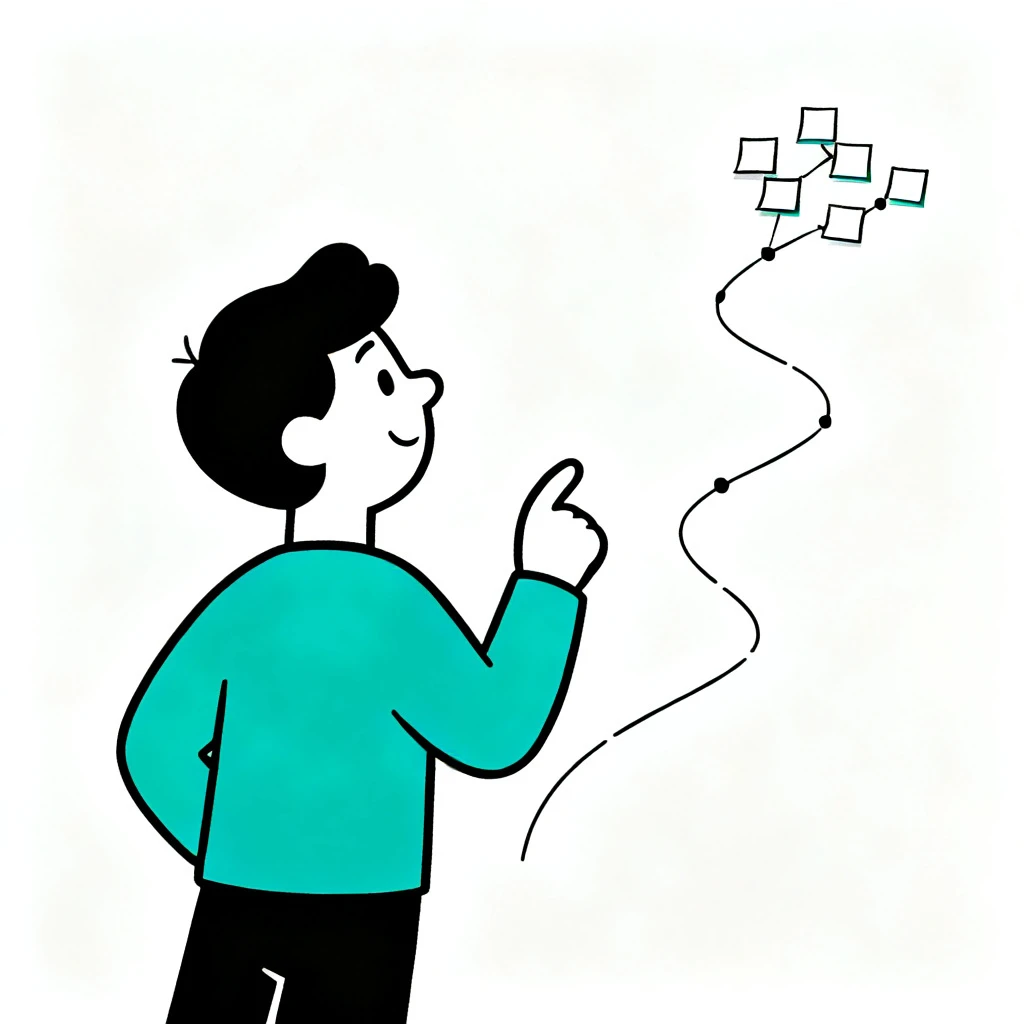
Tools like Deeditt are built around this exact loop: small “deeds” connect into “journeys” so a single entry stays small while the long arc of your story stays visible. The point isn’t the app — it’s making review effortless enough that you actually do it.
Daily notes aren’t memories. They’re signals. Read them.