When you write about something you lived through, it feels personal. Private. Like a story that only matters to you. But the moment you put it into words, it becomes something else: evidence. Proof that a certain path exists. A map for someone walking behind you.
This is why Deeditt separates Memories from Journeys. Memories are completely private — your space to process, reflect, and work through experiences honestly. But as you document and process, patterns emerge. Lessons solidify. And what began as personal reflection often becomes something worth sharing.
The challenge is recognizing that your experience, told honestly, belongs to a larger conversation. Not because you’re obligated to share it. But because the gap between your solitary struggle and someone else’s identical struggle, in the dark, waiting for evidence that they’re not alone — that gap is real. And your words can close it.
What Personal Experience Offers That Advice Can’t
Communities are built on accumulated wisdom. But wisdom doesn’t come from experts making general pronouncements. It comes from specific people saying: “Here’s what happened to me. Here’s what I tried. Here’s what I’d do differently.”
When you share your actual experience, you’re not offering tips or theory. You’re offering context. The texture of what it really felt like. The things that surprised you. The path that worked when the obvious approach didn’t. That kind of knowledge can’t be synthesized. It can only be lived and then passed on.
Someone trying to navigate the same situation doesn’t need seven expert opinions. They need one real account from someone who’s stood where they’re standing. Your account.
How Perspective Multiplies Understanding
Here’s what happens when multiple people from different positions share their experiences of the same problem or situation. Deeditt’s Shared Journeys feature is built on exactly this principle — allowing multiple people to contribute their perspective to a single story.
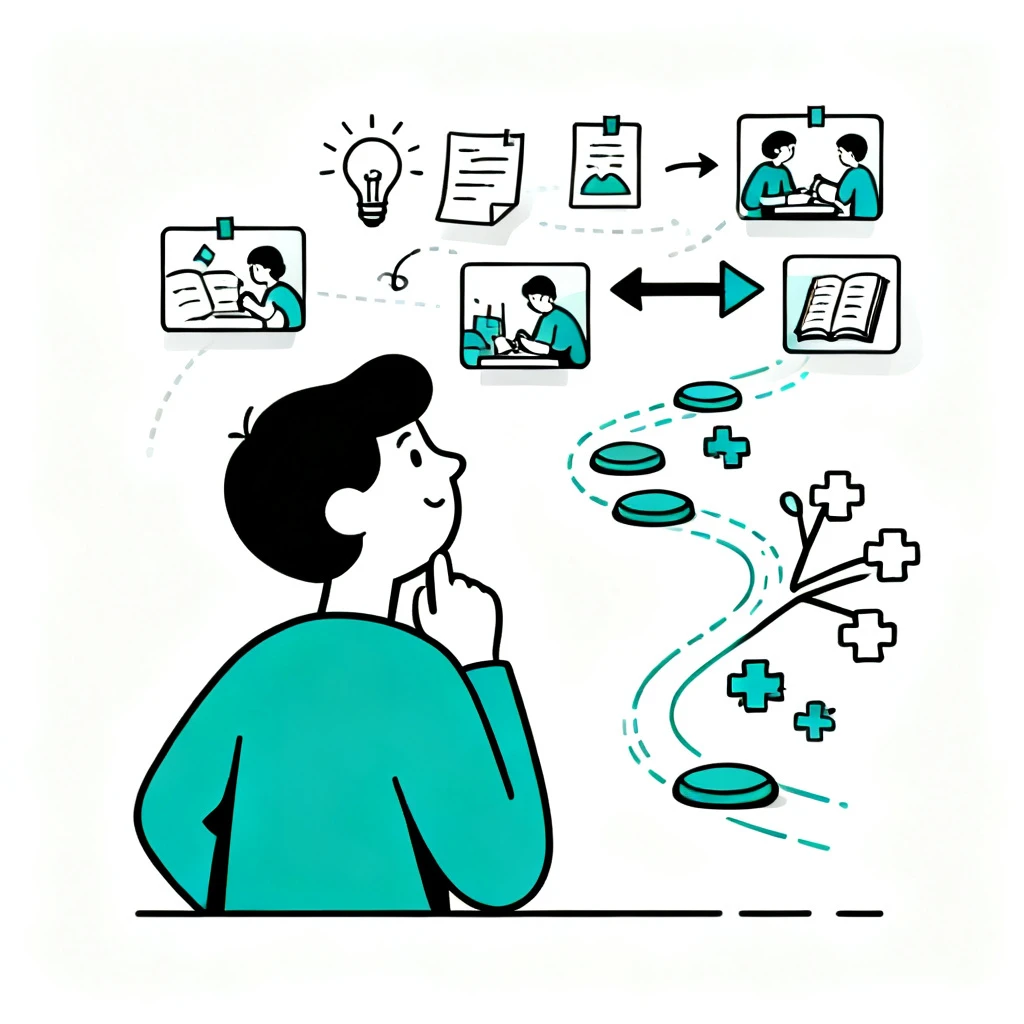
One person sees the pattern nobody else noticed. Another captures the emotional weight. Someone else remembers the practical steps that actually worked. A fourth person describes what it felt like from the supporting role — the helper nobody talks about.
Each perspective alone is incomplete. Together, they form something whole. They reveal what you couldn’t see from where you were standing. They show the problem from angles you never considered. They help others prepare for a situation by seeing it through multiple eyes instead of just one.
This diversity of perspective isn’t a nice bonus. It’s the whole point. A community becomes wise when it holds many versions of the same experience, not just the loudest voice or the most confident narrator. Deeditt recognizes this by enabling both individual Deeds and collaborative Journeys where different people document the same experience from where they stood.
The Transformation That Happens
When you decide to turn private reflection into shared experience, something shifts. You’re not just processing for yourself anymore. You’re contributing to how others will understand a path you’ve already walked.
This doesn’t mean editing out your truth. It means recognizing that your truth is valuable beyond your own learning. That the vulnerability you worked through, the mistake you recovered from, the realization you had at 3am — these don’t belong only to you.
They belong to the person who will read your account and finally understand what’s been happening to them. Who will see your experience and think, “Yes, that. Exactly that.” Who will avoid a mistake because you documented yours.
Building Knowledge Loops
Communities become smarter through these loops. You learn from others. You share what you learned. Others build on it. The knowledge gets richer each cycle.
Without your contribution, that loop breaks. Someone else will have to learn your lesson the hard way, just like you did. They’ll waste time on approaches you already know don’t work. They’ll miss details you’ve already discovered matter.
When you share, you compress someone else’s journey. Not by oversimplifying it, but by giving them the benefit of your lived experience. That’s how communities actually improve. Not through abstract best practices, but through connected individuals saying: “Here’s what I know because I lived it.”
How Deeditt Makes This Possible
Deeditt’s design is built specifically to transform personal writing into community knowledge through a structured cycle:
Start with Memories. You document your experiences privately in Memories — encrypted and completely confidential. This is where you process honestly, without any audience pressure. You work through your thoughts, feelings, and realizations in a safe space.
Extract the Deeds. As you reflect and process, you identify the moments that matter. These become Deeds — individual experiences or realizations that can stand alone. A Deed captures one significant moment: what happened, what you did, what you learned. This transforms raw reflection into organized knowledge units.
Build Journeys. Multiple Deeds connect into Journeys — longer narratives that show how something evolved over time. A career transition. A recovery process. A relationship. A major decision. Journeys preserve the arc of change, not just isolated moments.
Control Your Visibility. Here’s the crucial part: you decide what gets shared. Deeds and Journeys can be set to Public (everyone sees them), Community (only other Deeditt users), or Private (just you). You can start a Journey as private while you’re living through it, then shift it to Community once you’ve processed it, or make it Public when you’re ready to help others. The choice is always yours.
Build Community Knowledge. When people share their Deeds and Journeys at their own pace and comfort level, something emerges. A library of lived experience. Someone facing a similar situation can find real accounts from people who’ve walked that path. They see multiple perspectives through Shared Journeys. They understand they’re not alone. They learn faster because they’re building on collective experience, not starting from zero.
The cycle is complete: private reflection becomes shared knowledge becomes community understanding becomes help for the next person facing the same situation.
What Communities Become
When individuals turn their personal writing into shared knowledge through this framework, communities stop being audiences. They become collaborators in understanding. Each person contributes their piece at their own pace. Each person learns from others’ pieces. The whole becomes larger than the sum of its parts.
That transformation — from isolated experience to community knowledge — is how we actually help each other. Not through grand advice, but through quiet documentation. Person by person, story by story, perspective by perspective.
Your writing matters. Not just to you. To everyone who hasn’t yet walked the path you’ve already traveled. Deeditt just gives you the structure and safety to make sure your experience reaches them.