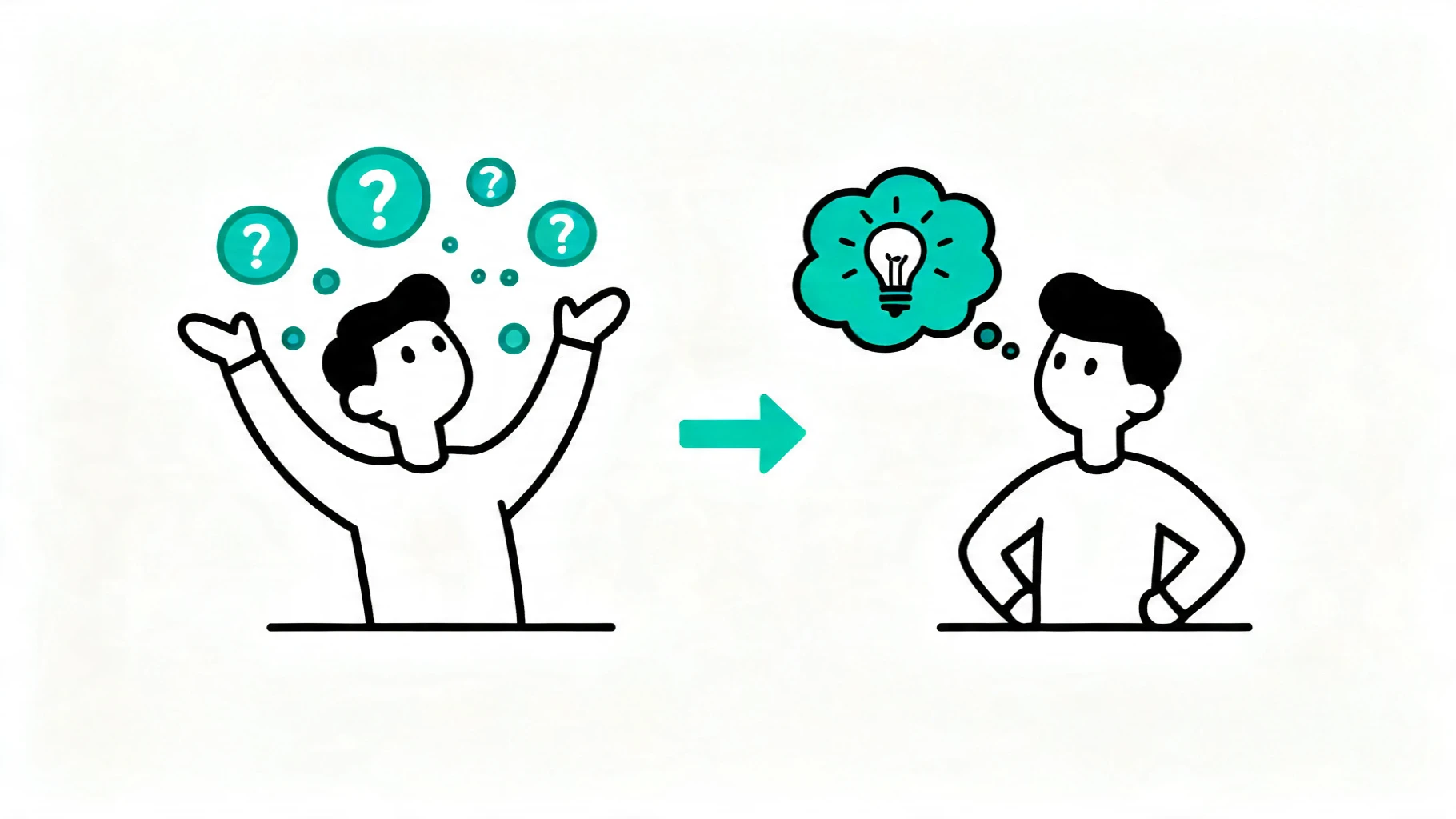
Most people who journal or reflect regularly have experienced this: you sit down, pour thoughts onto a page, and feel a momentary release—only to realize weeks later that nothing actually changed. The problem isn’t reflection itself. It’s reflection without scaffolding. Decades of psychology research reveal that unstructured reflection often mimics insight while producing none, and that the difference between going in circles and genuine growth comes down to one thing: structure that guides meaning-making.
Why your journal might be working against you
Psychologist Susan Nolen-Hoeksema spent her career distinguishing productive reflection from its destructive twin: rumination. Her research identified two subtypes of repetitive self-focused thought—brooding, a passive循环 comparison of reality against unmet standards, and reflective pondering, a purposeful turning inward to solve problems. The troubling finding? Without direction, most people default to brooding. Worse, Sonja Lyubomirsky’s experiments showed that ruminators genuinely believe they’re gaining insight, even as their mood and problem-solving ability deteriorate. It feels productive. It isn’t.
Edward Watkins’ Processing Mode Theory explains the mechanism. Open-ended self-reflection tends toward abstract thinking—“Why am I like this?”—which deepens depressive spirals. Concrete, structured processing—“What specific thing happened, and what did I learn?”—produces adaptive outcomes. James Pennebaker’s analysis of expressive writing confirmed this pattern: people who improved across writing sessions used increasing causal and insight language—words like “because,” “realize,” and “understand.” They weren’t just venting. They were constructing narratives.
The science of turning experience into meaning
Dan McAdams at Northwestern has spent decades studying how humans build what he calls narrative identity—an internalized, evolving life story that integrates the past and imagined future into something coherent. His research shows that people who organize difficult experiences into redemption sequences—narratives where negative events lead to positive meaning—report significantly higher well-being than those who don’t, regardless of what actually happened to them.
The key ingredients are specific. Tilmann Habermas identified four types of narrative coherence: temporal, biographical, causal, and thematic. Of these, causal coherence—explicitly connecting events to personal change—is the strongest predictor of well-being over time. This means the simple act of asking “what caused this, and how did it change me?” transforms a memory from an isolated fact into a building block of identity.
Jonathan Adler’s psychotherapy research delivered perhaps the most striking finding: when patients began telling stories with greater agency and causal structure, their narratives changed before their symptoms improved. Story first, healing second.
Structure isn’t a cage—it’s a path
Research on creativity and constraint consistently shows a U-shaped relationship: too many constraints stifle, but too few produce what Barry Schwartz calls the “tyranny of freedom.” People follow the path of least resistance, which in reflection means shallow event-logging or circular worry.
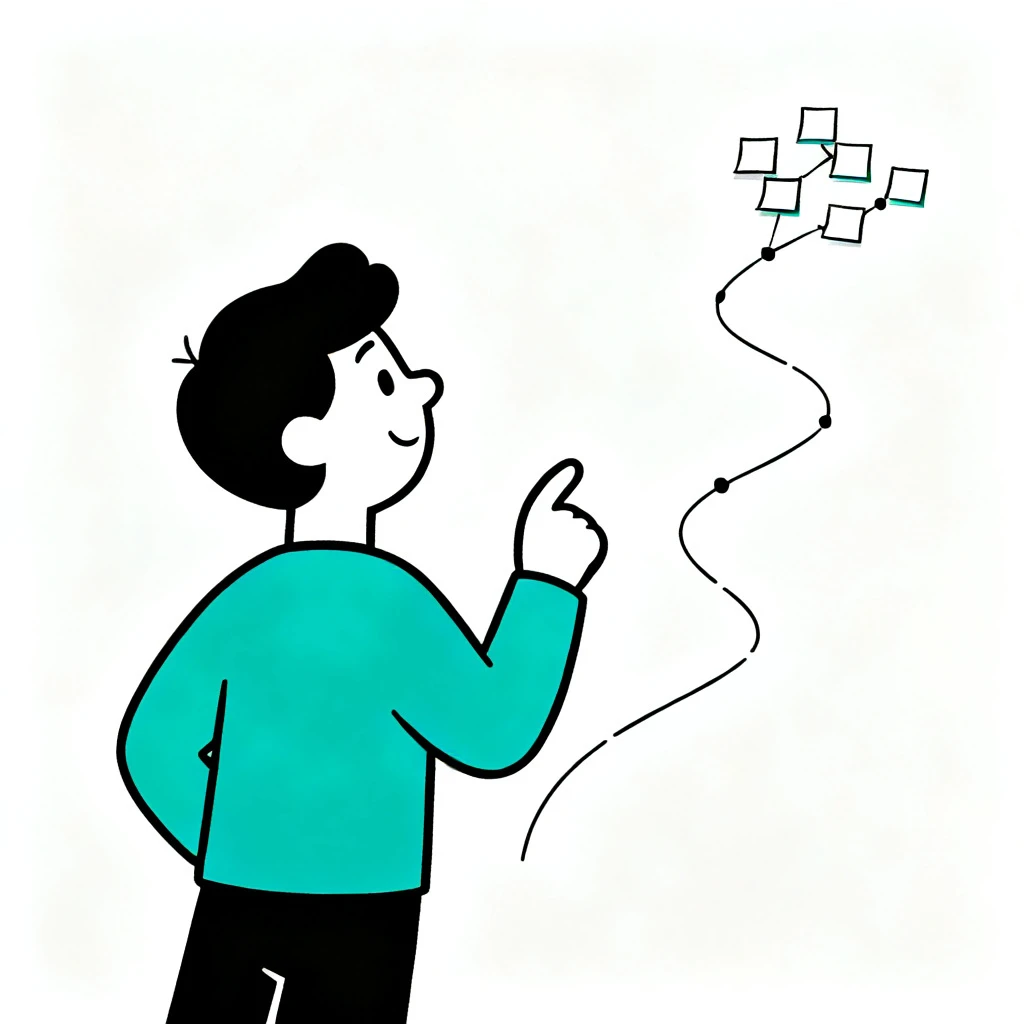
Effective reflective structure provides what cognitive load theory calls germane load—mental effort directed at meaningful processing rather than figuring out where to start. Platforms like Deeditt apply this principle by organizing individual moments into larger narrative arcs called Journeys, where each entry becomes a chapter in a coherent story rather than an isolated thought. This architecture naturally prompts the causal, temporal, and thematic thinking that research links to genuine growth. Most tools do not work this way — a comparison of the best journaling apps for reflection shows how few build structure into the writing itself.
The question that changes everything
The difference between reflection that circles and reflection that transforms comes down to one habit: asking “so what?” Not just what happened, but why it mattered, what it changed, and where it connects. Structure doesn’t replace authenticity. It gives your thinking a spine—so that reflection stops being a place you visit and becomes something that actually builds toward understanding.