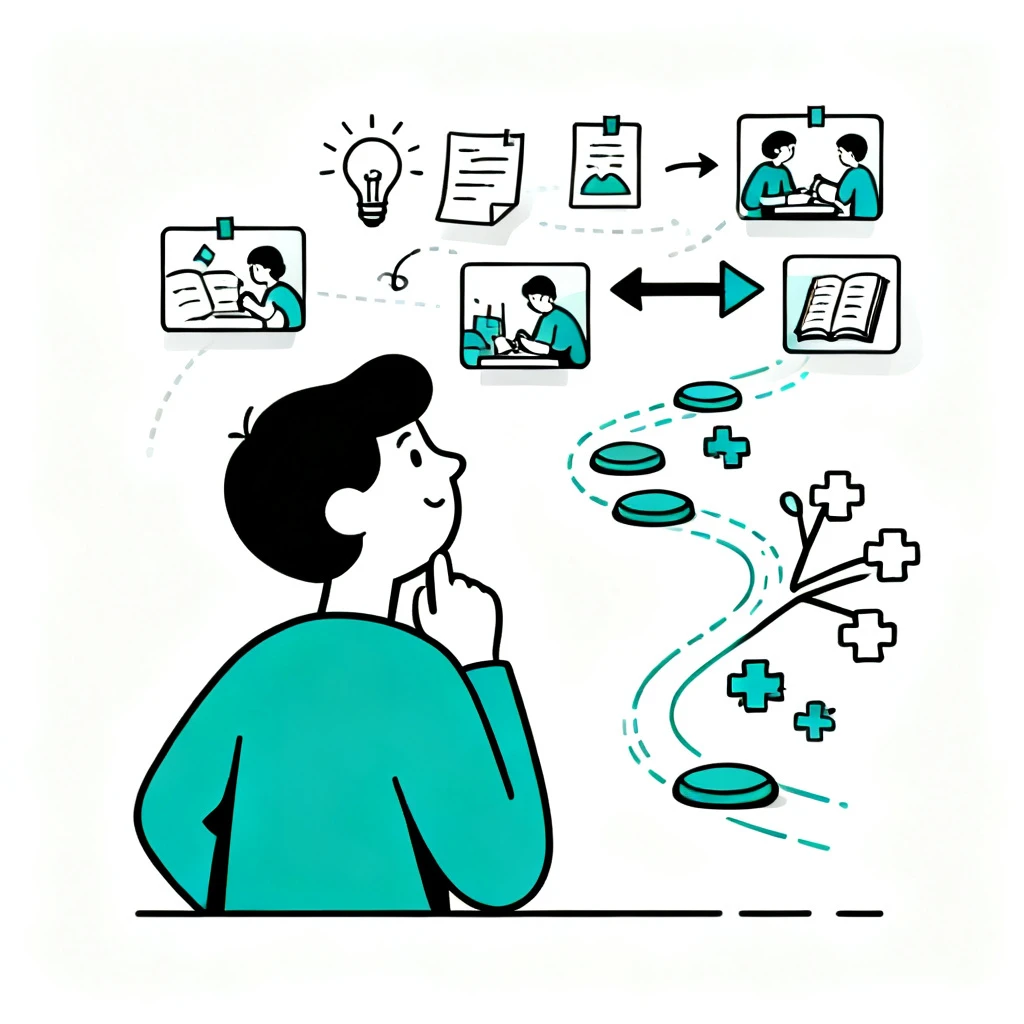
Reflection helps when it creates movement
Reflection is useful when it helps you move forward. It gives you a clearer understanding of what happened, what mattered, and what you might do differently next time.
Overthinking feels similar, but it works in the opposite direction. Instead of creating clarity, it keeps you stuck in the same thoughts. You revisit the same moment again and again without reaching a conclusion.
The key difference is simple: reflection leads somewhere, overthinking does not.
Reflection is structured; rumination is repetitive
Healthy reflection has a natural structure. It focuses on understanding, not on replaying.
You can guide it with simple questions:
- what actually happened
- how did I respond
- what does this show me
- what would I do differently
Overthinking, on the other hand, repeats the same questions without allowing an answer to settle. It often adds more doubt instead of clarity.
Writing creates boundaries for thinking
One of the easiest ways to avoid overthinking is to write things down. Writing gives your thoughts a place to land.
Instead of keeping everything in your head, you can:
- describe the situation
- name what you felt
- note what you learned
A page creates limits. It helps you process the experience once, instead of replaying it endlessly.
End reflection with direction
Reflection becomes more useful when it ends with a sense of direction. You do not need a perfect answer, but you need some form of orientation.
This can be:
- one small takeaway
- one question to revisit later
- one action to try next
Keep reflection balanced
You do not need to analyze everything deeply. Some experiences only need a short moment of attention.
The goal is not to think more. It is to understand enough to move forward.
When reflection creates clarity and direction, it supports you. When it becomes repetitive, it is a signal to stop.
Knowing the difference helps you reflect without getting stuck.