Most lives are remembered in fragments
People collect pieces of their lives in many different places. Notes, screenshots, photos, messages, and short posts all capture something real. But these pieces rarely stay connected.
Over time, important phases of life become difficult to revisit. You may remember that something happened, but not how it unfolded or what it meant in context.
This is not only a storage problem. It is a meaning problem. When experiences are scattered, it becomes harder to understand them.
Journeys create a better container
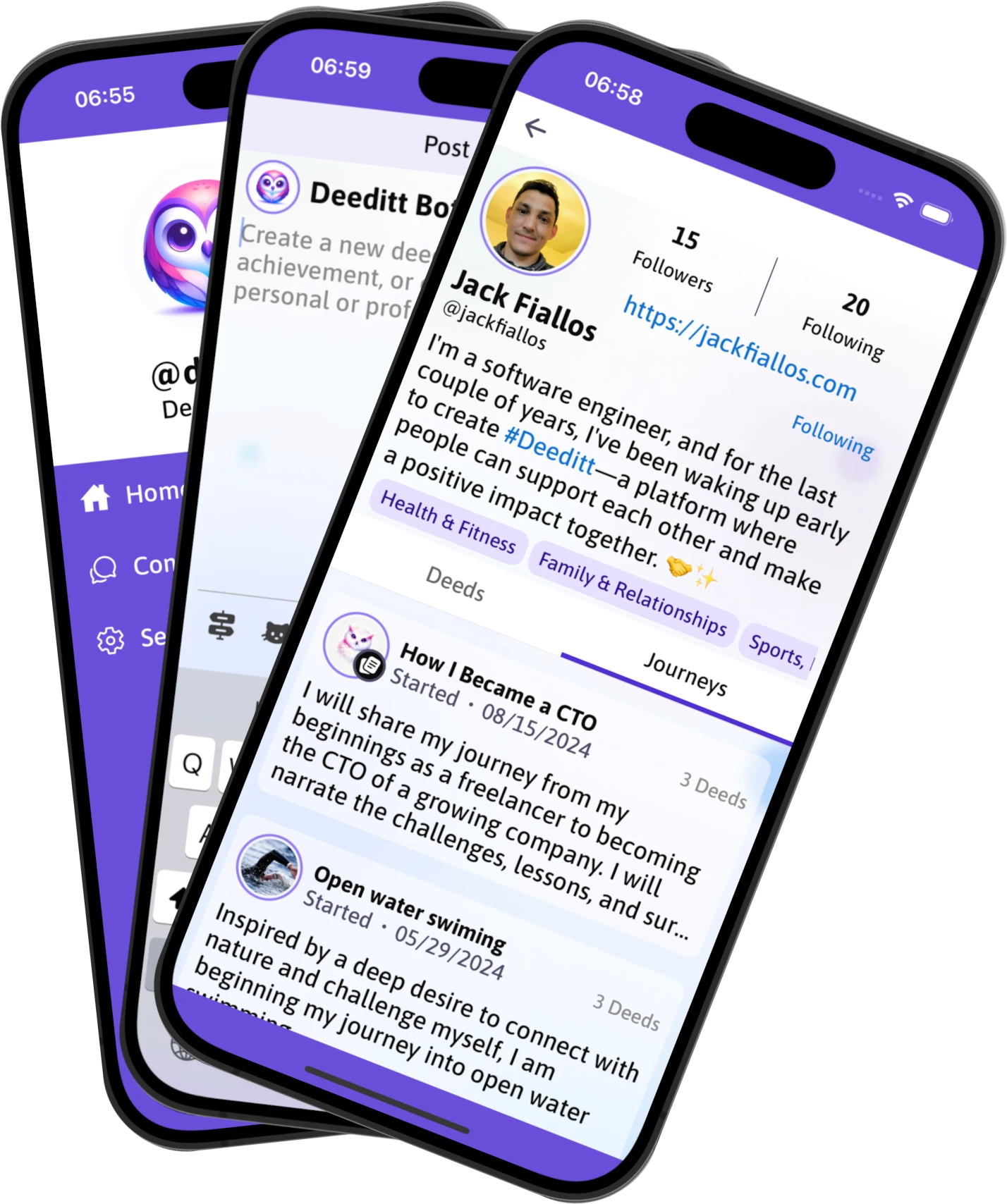
Deeditt introduces journeys as a way to group related moments together. Instead of treating each entry as separate, journeys provide a space where experiences can live side by side.
A journey can represent:
- a personal transition
- a learning process
- a relationship phase
- a professional goal
- a period of recovery or change
This structure does not require a perfect story from the beginning. It simply creates a place where meaning can develop over time.
Organization improves reflection
When related entries stay connected, patterns become easier to notice. People can see what changed, what repeated, and what led to important decisions.
Reflection becomes more natural because the archive follows how life actually unfolds, not how platforms usually separate it.
This makes it easier to return to past experiences with clarity.
Better structure creates better sharing
Journeys are valuable for private use, but they also improve how stories are shared. When someone decides to make a journey public, the structure is already there.
Readers can follow a process instead of trying to reconstruct meaning from disconnected pieces.
This makes stories more understandable, more useful, and more meaningful over time.