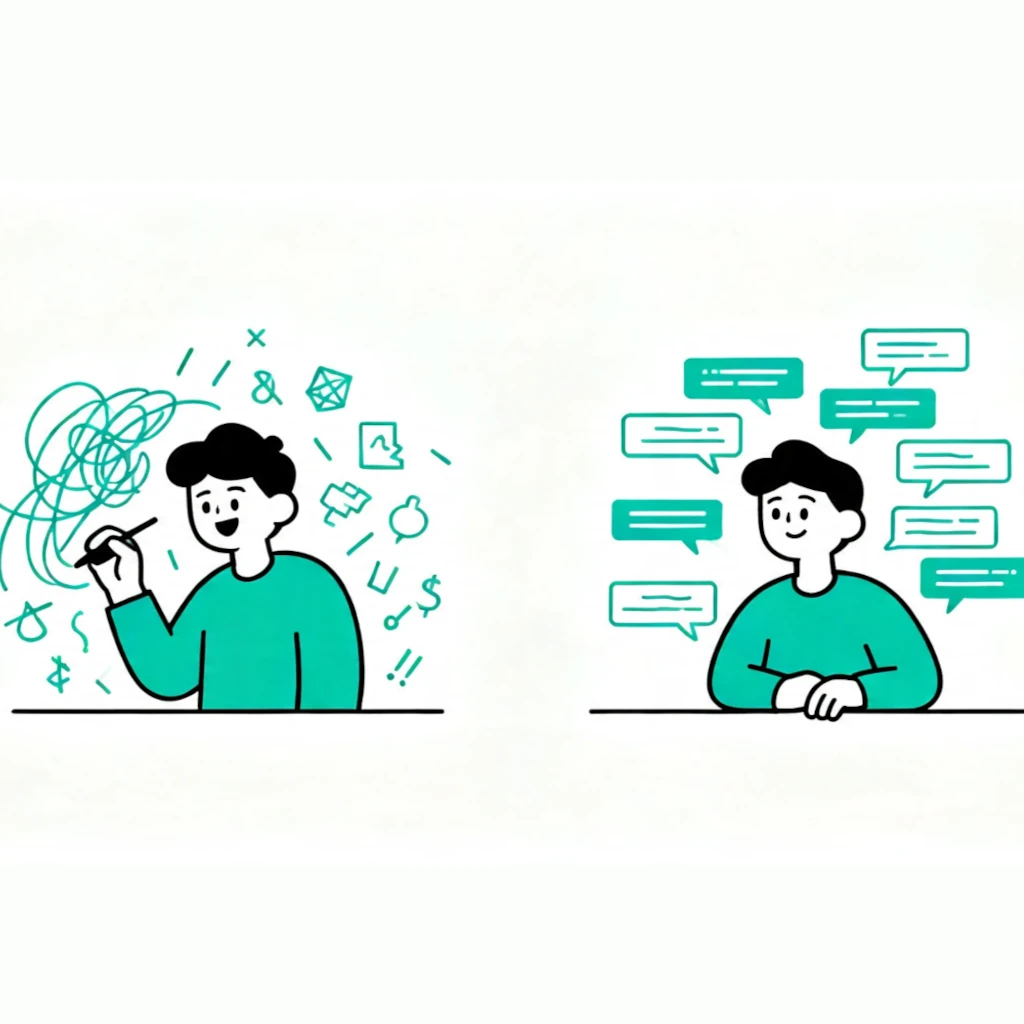
Venting feels like relief but usually deepens the wound; writing to understand is what actually produces change. Decades of research now show that emotional discharge and cognitive processing are not the same act — and confusing them is why so much reflective writing leaves people stuck. The difference is not how much you feel, but whether you build meaning from what you feel. That distinction has measurable consequences for mood, health, and growth.
The catharsis myth keeps refusing to die
The intuition that “letting it out” releases pressure comes from Freud’s hydraulic model of emotion, and it is wrong. In Brad Bushman’s landmark 2002 study, participants who punched a bag while thinking about someone who had provoked them became angrier and more aggressive, not less, than participants who did nothing. Bushman’s verdict: venting “is like using gasoline to put out a fire.” Susan Nolen-Hoeksema’s work on rumination shows the written version of the same trap — repeatedly rehearsing a grievance predicts depression, impairs problem-solving, and, over time, erodes the very social support ruminators seek. Expression without structure primes the networks it claims to relieve.
What the brain does when you actually understand
Writing to understand engages different machinery. Matthew Lieberman’s fMRI work on affect labeling found that putting a feeling into a precise word activates the right ventrolateral prefrontal cortex and, through medial prefrontal pathways, dampens amygdala activity. Naming is not the same as wallowing. James Pennebaker’s linguistic analyses of thousands of expressive-writing samples show that the people whose health improves are not those who use the most emotion words — they are the ones whose use of causal and insight words (because, realize, understand, reason) rises across sessions. Growth shows up in language as a shift from what happened to why it happened and what it means.
When writing helps and when it hurts
Ullrich and Lutgendorf (2002) made the contrast stark: students who journaled about stressors using only emotion reported more illness symptoms than controls, while those who combined emotion with cognitive processing developed greater awareness of positive benefits from the same events. Pennebaker’s own follow-ups found that trauma writing without narrative construction can retraumatize, because fragmented re-experiencing is not integration. The active ingredient is building a coherent story — setting, cause, perspective shift, meaning — revised over time, not released in one sitting.
Practically, that shift looks like a few disciplined moves:
- Replace “this happened to me” with “why did this happen, and what does it reveal?”
- Label emotions precisely instead of amplifying them.
- Track the same situation across multiple entries so understanding can evolve.
Structure is what turns feeling into insight
This is why the medium matters. Tools like Deeditt’s chapter-based Journeys are designed around the research: prompts that pull writers toward causal and insight language, templates that sequence reflection over time, and community examples of how others construct meaning from similar experiences. A single vent about job stress dissipates; a Journey about career identity accumulates.
The takeaway
Emotions are the raw material, not the product. Writing heals when it converts them — through naming, causal reasoning, and narrative — into something you understand well enough to carry forward.